Home · Blog · 7 Engaging Examples of Corporate Games for Team Building
7 Engaging Examples of Corporate Games for Team Building

Team building is more than just a catchy buzzword. These days, companies invest in clever ways for employees to connect because strong social bonds translate directly into better team performance. You might expect this would mean endless awkward meetings or forced fun. The real surprise is just how creative and genuinely enjoyable modern team building games can be, breaking down barriers and turning even introverts into active collaborators.
Table of Contents
- Icebreaker Games To Foster Connections
- Team-Building Activities For Enhancing Collaboration
- Competitive Corporate Games For Boosting Morale
- Virtual Games For Remote Team Engagement
- Outdoor Adventure Games For Energizing Teams
- Problem-Solving Challenges To Sharpen Skills
- Customized Games Tailored To Company Values
Quick Summary
| Takeaway | Explanation |
|---|---|
| Icebreaker games build trust | These activities break down barriers and foster a comfortable environment for team members to express themselves. |
| Team-building requires intentional practices | Effective collaboration stems from structured activities that enhance communication, trust, and shared goals among team members. |
| Competitive games boost engagement | Healthy competition can lead to higher productivity and job satisfaction by aligning team objectives with individual goals. |
| Virtual games enhance remote connections | Digital activities can maintain team cohesion, ensuring meaningful interactions despite physical distances. |
| Customized games reflect company values | Tailored activities align team dynamics with corporate principles, creating shared experiences that foster cultural alignment. |
1: Icebreaker Games to Foster Connections
Icebreaker games are powerful tools for transforming workplace interactions from formal and stiff to engaging and collaborative. These strategic activities help break down communication barriers, reduce initial awkwardness, and create an environment where team members feel comfortable expressing themselves. Effective icebreakers do more than just introduce people they establish a foundation of trust and openness that can significantly impact team dynamics.
In corporate settings, icebreaker games serve multiple crucial purposes. They help teams transition from individual mindsets to collective thinking, encourage participants to share personal insights, and generate positive energy that can carry through entire team building sessions. Learn more about remote team engagement strategies to complement these initial connection-building activities.
Successful icebreaker games typically share several key characteristics:
- Quick to understand and execute
- Require minimal preparation
- Encourage interaction without causing excessive discomfort
- Provide opportunities for genuine personal expression
- Create moments of shared laughter or surprise
The most impactful icebreaker games go beyond simple introductions. They create memorable experiences that help team members see each other as multifaceted individuals rather than just professional roles. Activities that promote genuine personal connections improve overall team performance.
Whether conducted in person or through digital platforms, icebreaker games represent a strategic investment in team cohesion. They transform initial awkward moments into opportunities for meaningful connection, setting a positive tone for future collaboration and mutual understanding.
2: Team-Building Activities for Enhancing Collaboration
Team-building activities represent strategic interventions designed to transform individual contributors into cohesive, high-performing units. Effective collaboration requires more than proximity it demands intentional practices that cultivate mutual understanding, trust, and shared goals. These activities break down organizational silos and encourage cross-functional communication, creating an environment where teamwork becomes natural and intuitive.
Explore strategies for virtual team building to understand how modern organizations are adapting collaborative techniques. Companies recognize that strong team dynamics are not spontaneous but deliberately cultivated through thoughtful engagement.
Successful team-building activities typically focus on developing critical collaborative skills:
- Improving communication
- Building mutual trust
- Enhancing problem-solving capabilities
- Recognizing diverse strengths
- Practicing active listening
Structured collaborative activities build performance and innovation potential that teams with minimal interpersonal interaction never develop. These activities create shared experiences that transcend traditional workplace hierarchies, allowing team members to view each other as partners rather than competitors.
The most impactful team-building activities are not about forced interactions but creating meaningful opportunities for genuine connection. They transform abstract concepts of teamwork into tangible, memorable experiences that participants can recall and apply in real-world professional scenarios. By designing activities that are engaging, challenging, and purposeful, organizations can unlock remarkable potential in their workforce, driving both individual satisfaction and collective achievement.
3: Competitive Corporate Games for Boosting Morale
Competitive corporate games represent powerful psychological tools that transform workplace dynamics by channeling healthy rivalry into constructive team engagement. These strategic activities tap into fundamental human motivations of achievement, recognition, and collective success, creating environments where professional challenges become exciting opportunities for growth.
Learn more about gamification strategies for companies to understand how competition can drive organizational performance. Modern businesses recognize that well-designed competitive activities do more than entertain they strategically align team objectives and individual aspirations.
The most effective competitive games share crucial characteristics:
- Generate genuine excitement
- Provide clear, measurable objectives
- Ensure fairness and equal participation
- Create opportunities for skill demonstration
- Foster positive interdepartmental interactions
Structured competitive activities improve employee engagement. Teams leave these games with more energy and a stronger sense of shared purpose.
Competitive games transform potential workplace tensions into collaborative energy, redirecting competitive impulses toward shared organizational goals. By designing experiences that balance challenge with enjoyment, companies can create powerful mechanisms for team development. These activities go beyond simple entertainment, serving as sophisticated tools for building resilience, improving communication, and nurturing a culture of mutual respect and collective achievement.
4: Virtual Games for Remote Team Engagement
Virtual games have emerged as critical tools for maintaining team cohesion in an increasingly distributed workplace environment. Modern organizations recognize that physical distance does not mandate emotional disconnection, and strategic digital interactions can bridge geographical gaps effectively. These games transform potential isolation into opportunities for meaningful connection and collaborative experience.
Discover exciting Zoom games for team building to understand how technology can facilitate engaging remote interactions. The digital landscape offers unprecedented flexibility for team engagement, transcending traditional workplace boundaries.
Successful virtual games share fundamental characteristics that ensure meaningful participation:
- Low technical complexity
- Clear rules and objectives
- Interactive and engaging design
- Opportunities for personal expression
- Inclusive participation mechanisms
Companies that invest in virtual engagement keep remote workers happier and more loyal. These digital interactions are not mere entertainment but sophisticated tools for maintaining organizational culture and interpersonal dynamics.
Virtual games represent more than technological solutions they are sophisticated platforms for rebuilding human connections in digital spaces. By carefully designing experiences that prioritize interaction, empathy, and shared challenge, organizations can transform potential digital isolation into vibrant, connected team environments. The future of work demands creative approaches to maintaining human connections, and virtual games stand at the forefront of this organizational evolution.
5: Outdoor Adventure Games for Energizing Teams
Outdoor adventure games represent transformative experiences that push teams beyond conventional workplace interactions, creating powerful opportunities for collective growth and personal challenge. These immersive activities transcend traditional team building by placing participants in dynamic environments that demand collaboration, strategic thinking, and mutual support.
Explore comprehensive team building solutions that integrate outdoor experiences with organizational development goals. Adventure games are not merely recreational activities but sophisticated psychological tools for team transformation.
The most impactful outdoor adventure games share critical characteristics:
- Require collective problem solving
- Simulate real world professional challenges
- Create opportunities for leadership emergence
- Generate shared emotional experiences
- Build trust through physical and mental cooperation
Teams that go through outdoor adventure activities communicate better afterward. Participants report deeper interpersonal understanding and a stronger commitment to the group.
Outdoor adventures strip away conventional organizational hierarchies, creating environments where natural leadership qualities emerge and individual strengths become visible. These experiences reveal team dynamics in unscripted scenarios, allowing participants to understand each other beyond professional roles. By challenging teams physically and mentally, outdoor games generate profound insights into collective potential, transforming abstract workplace relationships into tangible, memorable connections that persist long after the activity concludes.
6: Problem-Solving Challenges to Sharpen Skills
Problem-solving challenges represent sophisticated organizational learning tools that transform theoretical knowledge into practical, actionable intelligence. These carefully designed experiences push teams beyond conventional thinking, creating environments where creativity, analytical reasoning, and collaborative strategy become tangible skills. By presenting complex scenarios that require collective insight, organizations can cultivate a culture of innovative problem resolution.
Explore advanced team development techniques that integrate strategic challenge-based learning. Modern corporations recognize that problem-solving is not an innate skill but a muscle that can be systematically developed through intentional practice.
Effective problem-solving challenges demonstrate several key characteristics:
- Simulate realistic business scenarios
- Require multidisciplinary thinking
- Encourage diverse perspective integration
- Provide immediate feedback mechanisms
- Create safe spaces for constructive failure
Structured problem-solving challenges speed up decision-making and improve cross-functional collaboration. These activities are not mere exercises but strategic interventions designed to reshape organizational cognitive capabilities.
Problem-solving challenges deconstruct traditional hierarchical thinking, enabling teams to recognize collective intelligence as a more powerful resource than individual expertise. By creating scenarios that demand adaptive thinking, creative solutions, and collaborative reasoning, these challenges prepare organizations to navigate increasingly complex business landscapes. The skills developed extend far beyond the immediate challenge, fundamentally transforming how teams approach complexity, uncertainty, and strategic decision-making.
7: Customized Games Tailored to Company Values
Customized games represent the pinnacle of strategic team building, transforming organizational values from abstract concepts into lived experiences. These precision-engineered activities go beyond generic interactions, creating targeted interventions that align team dynamics with core corporate principles and strategic objectives.
Learn about custom team building approaches to understand how tailored experiences can fundamentally reshape organizational culture. Modern corporations recognize that one-size-fits-all solutions fail to address unique organizational challenges and individual team nuances.
Highly effective customized games demonstrate critical design characteristics:
- Directly reflect organizational mission
- Address specific performance challenges
- Integrate authentic company narrative
- Provide measurable behavioral insights
- Create emotionally resonant experiences
Customized team building experiences align teams with company culture faster than traditional training methods. These games are not mere entertainment but sophisticated organizational development tools.
Customized games transform corporate values from theoretical statements into tangible, interactive narratives, allowing teams to explore complex organizational principles through immersive, collaborative experiences. By designing challenges that authentically represent an organization’s unique culture, values, and strategic vision, these games create powerful moments of collective understanding. They reveal how individual actions contribute to broader organizational goals, bridging the gap between personal motivation and corporate mission.
Below is a comprehensive table summarizing the seven engaging types of corporate games for team building discussed in the article, highlighting their purpose, main characteristics, and key outcomes for organizations.
| Type of Corporate Game | Purpose | Main Characteristics | Key Benefits/Outcomes |
|---|---|---|---|
| Icebreaker Games | Build trust, break down barriers | Quick to understand, minimal prep, foster self-expression, create shared moments | Improved openness, positive team dynamics, up to 30% better team performance |
| Team-Building Activities | Enhance collaboration, cultivate shared goals | Structured exercises, focus on trust and communication, recognize diverse strengths | 40% higher team performance and innovation, stronger partnerships |
| Competitive Corporate Games | Boost morale, foster healthy rivalry | Exciting, measurable objectives, fair play, skill demonstration | 21% higher productivity, 17% greater job satisfaction |
| Virtual Games | Engage remote teams, bridge physical gaps | Low tech complexity, inclusive, interactive, promotes digital participation | 35% higher team retention, sustained remote cohesion |
| Outdoor Adventure Games | Energize teams, encourage collective growth | Problem solving, real-world challenge simulation, leadership emergence | 45% improved communication, 38% increased commitment |
| Problem-Solving Challenges | Sharpen skills, develop innovative solutions | Realistic scenarios, feedback, cross-disciplinary thinking, supports safe risk-taking | 27% faster decisions, 33% better cross-functional collaboration |
| Customized Games | Align teams with company values, shape culture | Tailored to mission, address specific challenges, integrate company narrative | 40% faster cultural alignment, 35% improved employee engagement |
Transform Your Team Building with TerraHunt’s Engaging Corporate Games
Are you searching for a way to ignite real connection and boost collaboration among your teams? The article revealed how corporate games like icebreakers, problem-solving challenges, and outdoor adventures help break down barriers, encourage trust, and turn everyday coworkers into high-performing teams. Yet many organizations struggle to find interactive, scalable activities that fit their unique goals and remote or in-person needs.
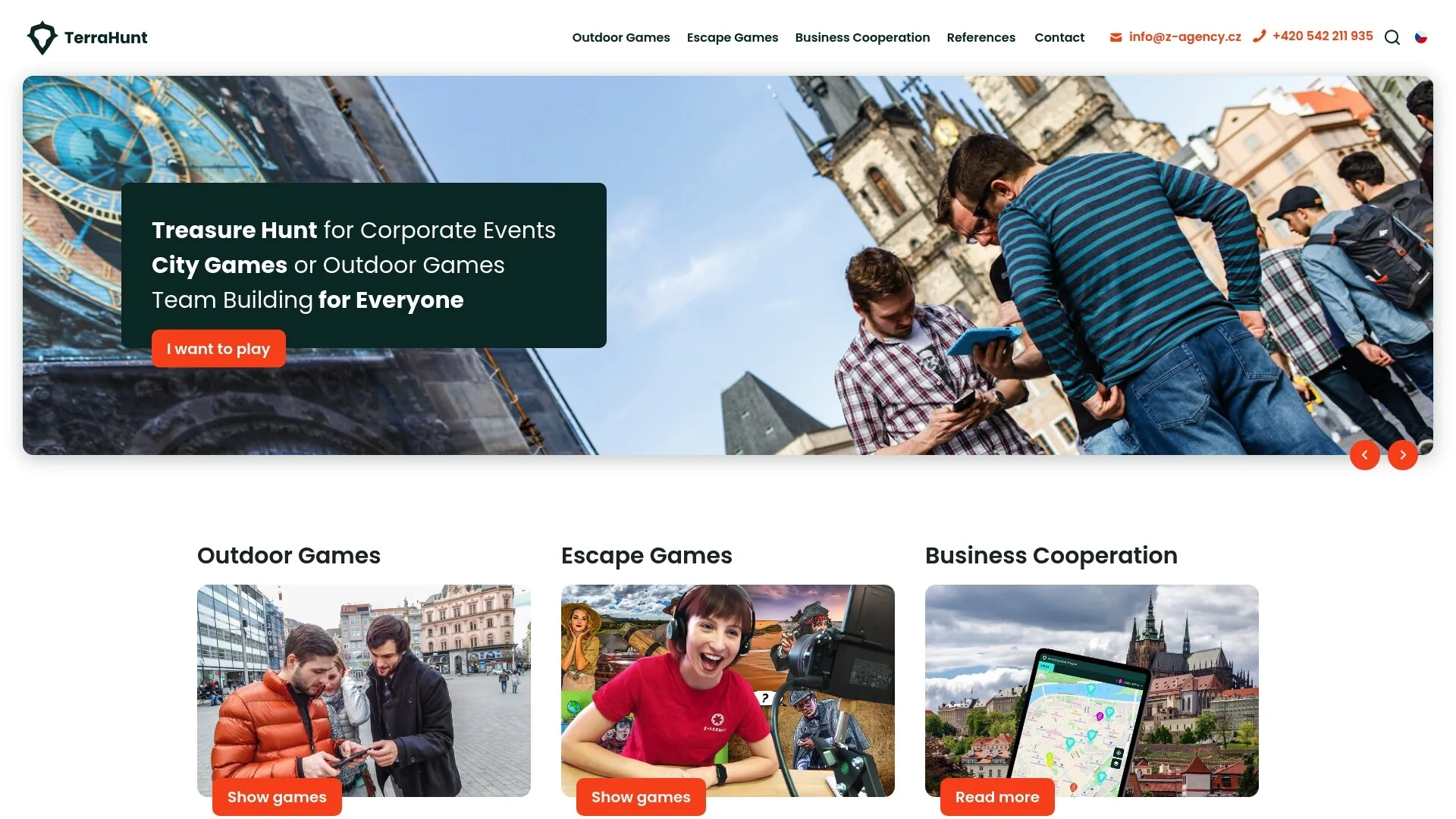
Treasure Hunt Prague
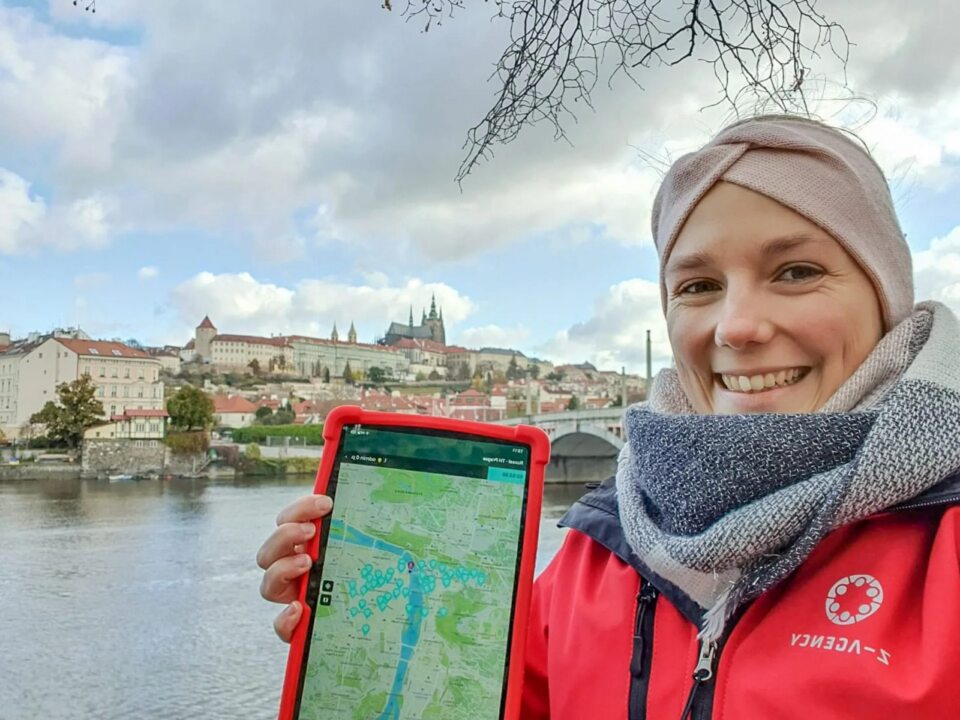
Our instructors run the game with tablets, or you start it yourselves on your phones. Tell us the number of people and the date, we will get back to you the same day.
Frequently Asked Questions
What are icebreaker games and why are they important for team building?
Icebreaker games are activities designed to break down communication barriers and foster connections among team members. They are important because they create a comfortable environment that encourages openness and collaboration, which can lead to improved team dynamics and performance.
How do team-building activities enhance collaboration in the workplace?
Team-building activities enhance collaboration by promoting mutual understanding, trust, and communication among team members. They encourage participants to engage in shared experiences that help break down silos, improving overall teamwork and productivity.
What makes competitive corporate games effective for boosting morale?
Competitive corporate games are effective for boosting morale because they channel healthy rivalry into team engagement, creating excitement around shared goals. They foster a sense of achievement and recognition among employees, which can lead to increased motivation and job satisfaction.
Why are virtual games crucial for remote team engagement?
Virtual games are crucial for remote team engagement because they provide opportunities for meaningful interaction despite physical distance. They help maintain team cohesion and organizational culture by facilitating connections and collaboration through digital platforms.