Home · Blog · Bratislava, Capital of Slovakia: Facts and Visitor Guide
Bratislava, Capital of Slovakia: Facts and Visitor Guide
Bratislava's population, coordinates, and old names, Pressburg, Pozsony, Prešporok, plus the main sights and a day trip from Vienna.
Bratislava is the capital and largest city of Slovakia, set on the Danube River almost exactly where Slovakia, Austria, and Hungary meet. It has carried its current name for just over a century, and Bratislava and Vienna are generally described as Europe’s closest pair of sovereign national capitals, excluding Rome and Vatican City, about 31 miles (50 km) apart in a straight line, roughly 37 miles (60 km) apart by road.
- Bratislava Quick Facts
- The Names of Bratislava
- What to See
- Parks and Green Bratislava
- Day Trip from Vienna
Bratislava Quick Facts
Here is the short version, the numbers people usually come looking for.
| Fact | Detail |
|---|---|
| Population | 480,902 (2025 estimate), per Wikipedia, sourced to the Statistical Office of the Slovak Republic. |
| Area | About 142 sq mi (368 km²) |
| Coordinates | 48°08′ N, 17°07′ E (roughly 48.14° N, 17.11° E) |
| First written mention | 907 AD, traditionally identified with a fortress called “Brezalauspurc,” though historians debate whether that name refers to this exact site |
| Capital status | Capital of Slovakia since 1919; capital of the fully independent Slovak Republic since January 1, 1993 |
| Distance from Vienna | About 31 mi (50 km) in a straight line, roughly 37 mi (60 km) by road — generally cited as the shortest gap between any two national capitals in Europe, excluding Rome and Vatican City |
The Names of Bratislava
For most of its history, nobody called this city Bratislava. Germans called it Pressburg, Hungarians knew it as Pozsony, Slovaks called it Prešporok, and Czechs referred to it as Prešpurk — four names for the same city.
As Czechoslovakia was taking shape in late 1918, the city’s German and Hungarian leadership tried to head off annexation by declaring it a free city named “Wilsonovo mesto” (Wilson’s City), after U.S. President Woodrow Wilson. Czechoslovak troops occupied the city on January 1, 1919, ending that attempt. On March 27, 1919, the new authorities renamed it Bratislava, a Slovak form coined by 19th-century scholars that spread only from the 1840s onward. Visitors and commuters often shorten it to “Blava,” though many longtime locals prefer the full name or the historic Prešporok.
| Language | Old name | Status |
|---|---|---|
| German | Pressburg | Official until 1919; still in everyday use |
| Hungarian | Pozsony | Official until 1919; still in everyday use |
| Slovak | Prešporok | Official until 1919; still used historically |
| Czech | Prešpurk | Official until 1919; still used historically |
| Official (all languages) | Bratislava | Official since March 27, 1919 |
What to See
Bratislava’s Old Town is small enough to cover on foot in an afternoon, but it holds centuries of layered history.
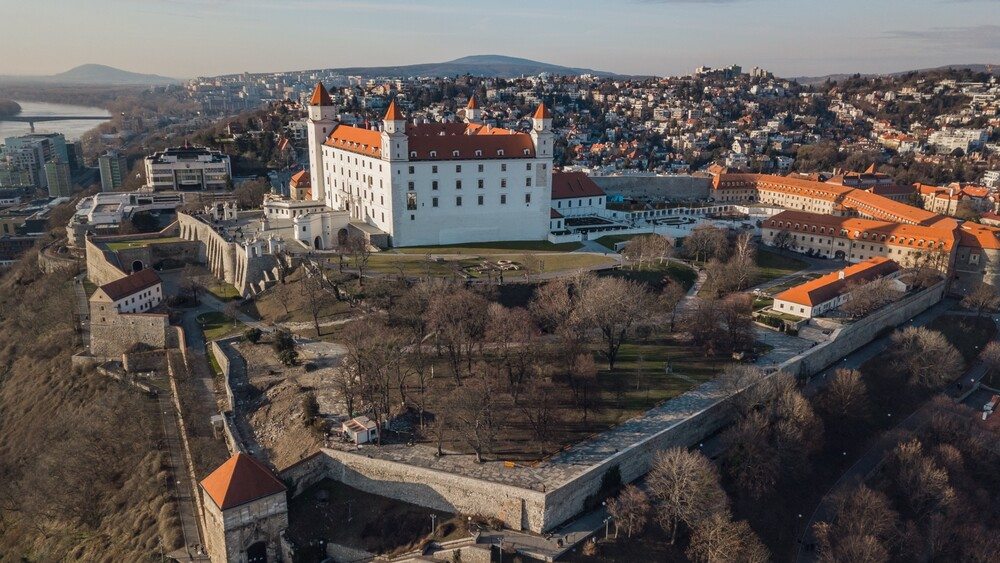
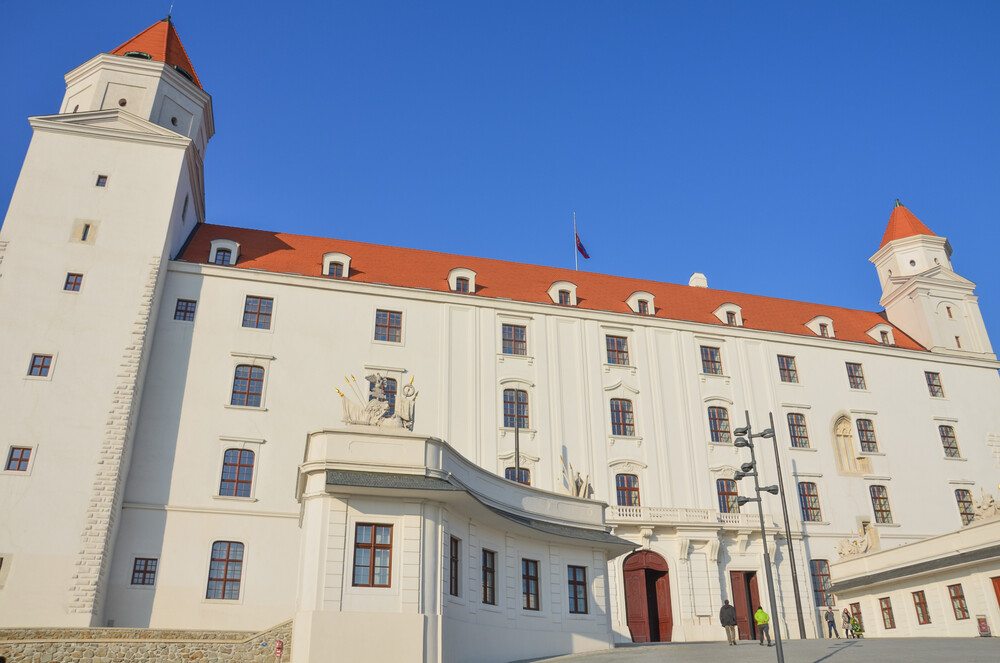
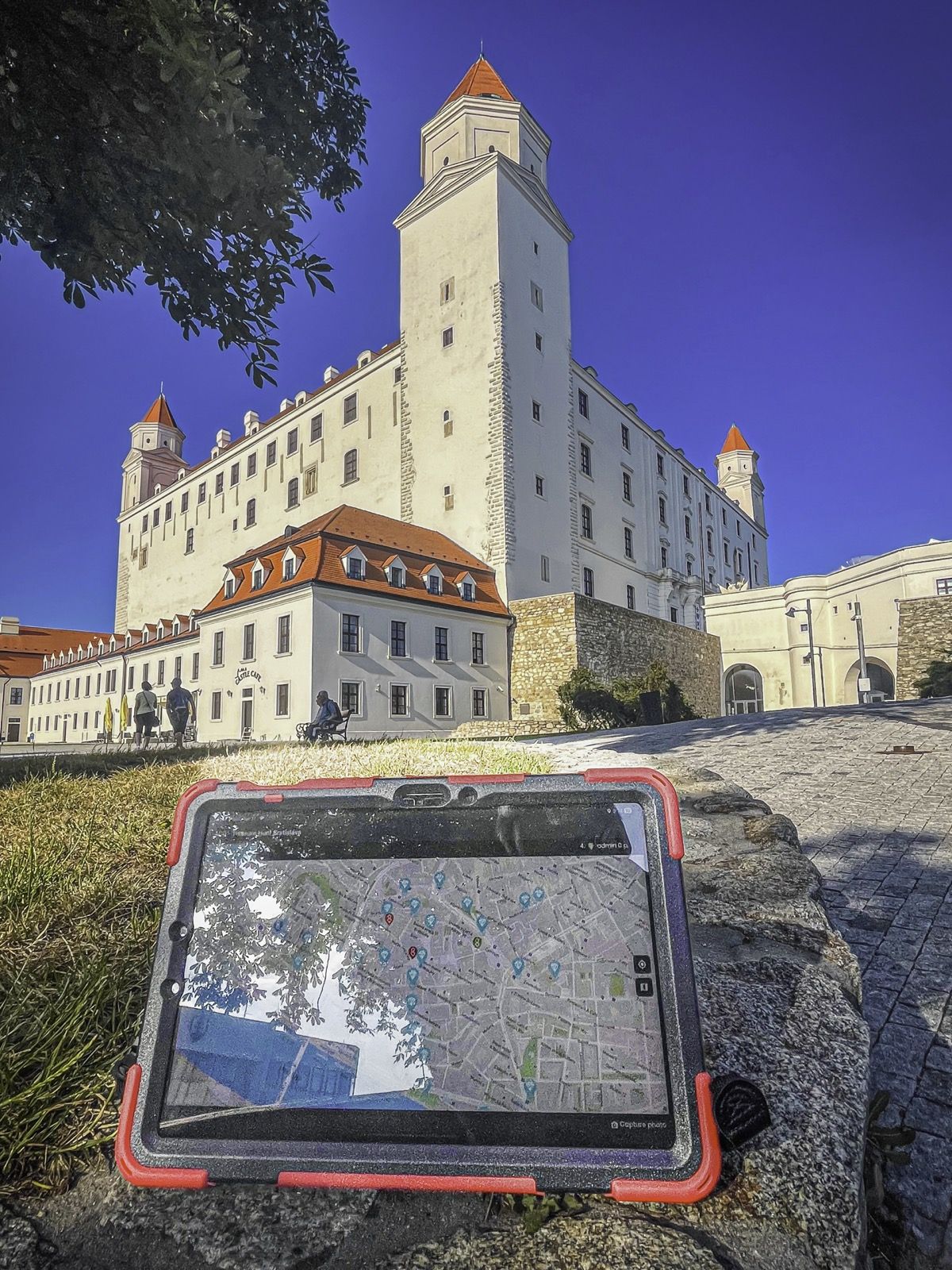
- Bratislava Castle: a hillfort has stood on this rock above the Danube since as early as the 9th century. It has been rebuilt many times since: a Gothic overhaul under King Sigismund in the 1430s, Renaissance changes after 1552, a Baroque expansion in the 17th century that added the four corner towers, and a rococo remodel under Maria Theresa in the 1760s that turned it into a royal residence. A fire gutted it in 1811, and the castle stood in ruins for well over a century before being restored, work that began in the 1950s.
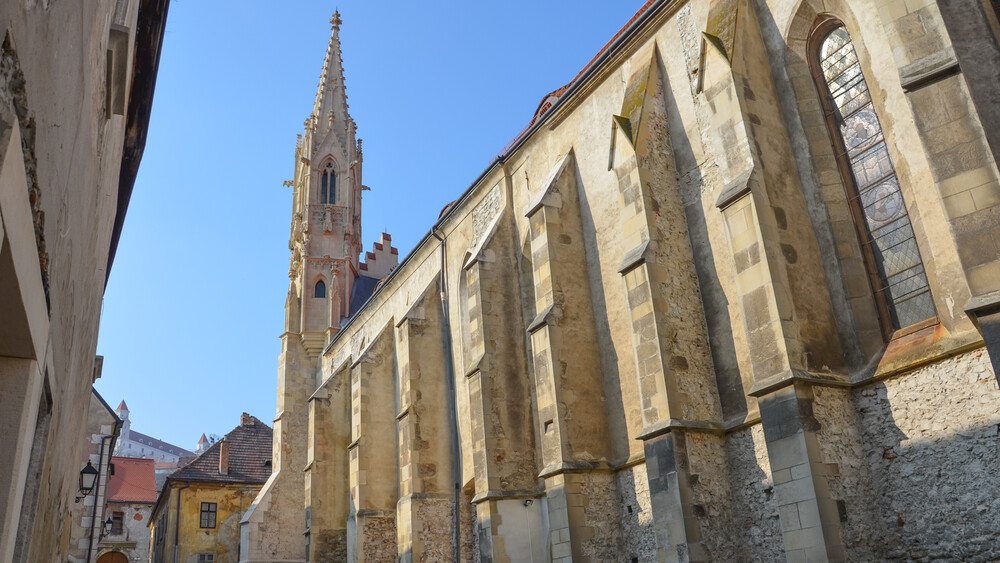
- St. Martin’s Cathedral: eleven Hungarian monarchs—ten kings and one reigning queen, Maria Theresa—along with seven queens consort, were crowned here between 1563 and 1830, after Ottoman advances made the older coronation city of Székesfehérvár too dangerous to use.
- Michael’s Gate: the only surviving gate from the medieval town walls, built around 1300. Its present 51-meter tower is a Baroque rebuild from 1753 to 1758, topped with a statue of St. Michael.
- Main Square and Čumil: Hlavné námestie is the Old Town’s social hub, lined with Baroque facades. A few steps away on Panská Street, a bronze sewer worker named Čumil peeks out of a manhole cover, a favorite photo stop since 1997.
- Blue Church of St. Elizabeth: an Art Nouveau church built between 1908 and 1913, finished in pale blue plaster with ceramic majolica details and a glazed blue roof.
- UFO Bridge: Most SNP opened on August 26, 1972, and carries a flying-saucer-shaped restaurant and observation deck above the roadway, with the Old Town on one bank and the Petržalka housing blocks on the other.
Parks and Green Bratislava
In 2018, the Dutch travel site TravelBird ranked fifty world cities by green space per resident for its Green Cities Index. Bratislava placed third, behind only Reykjavik and Auckland.
Much of that space sits at the city’s northern edge, where Bratislava Forest Park climbs into the foothills of the Little Carpathians. It holds four ponds, old water mills on the Vydrica stream, and a television tower on top of Kamzík hill.
South of the river, in Petržalka, Sad Janka Kráľa makes its own claim to age: it’s one of the oldest municipal parks in Europe, laid out between 1774 and 1776 and covering 42 hectares today. A restored garden gazebo, built around a reconstructed Gothic tower from a Franciscan church, still stands at its center.
West of downtown, where the Danube meets the Morava River, Devín Castle sits on a rocky outcrop overlooking both riverbanks and the Austrian border. It’s a separate trip from the Old Town, not a stop on the way to Vienna, but well worth the short ride out.
Day Trip from Vienna
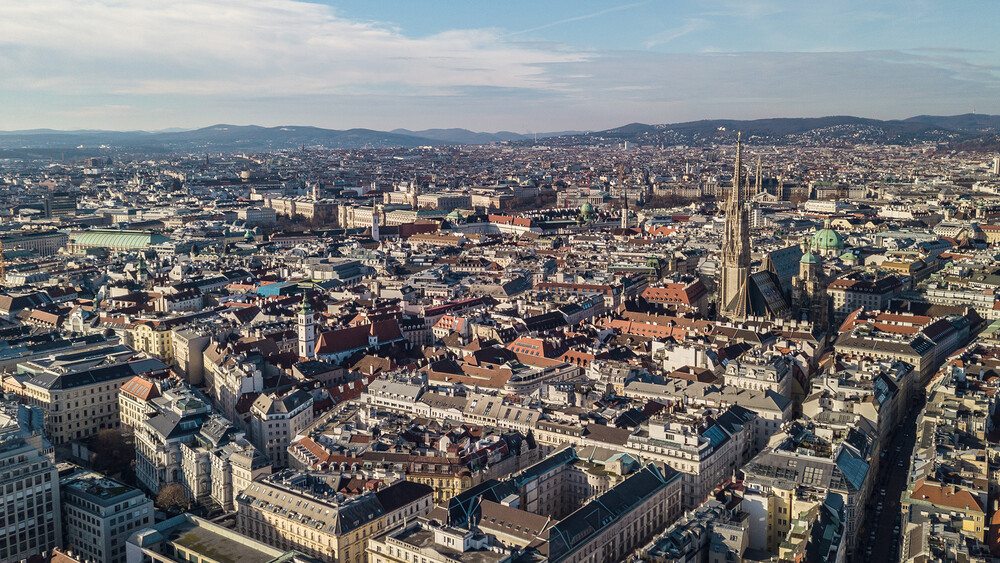
Bratislava and Vienna are generally described as Europe’s closest pair of sovereign national capitals, excluding Rome and Vatican City, and the connection between them is simple. Direct trains run roughly every hour and take about an hour, no transfers needed. Buses cover the same route in a similar time. Both cities sit inside the Schengen Area, so there’s normally no routine immigration control at the border, though temporary checks are possible — bring a passport or national ID anyway.
That makes Bratislava an easy add-on to a Vienna trip, whether you’re stopping for an afternoon or staying overnight. Some visitors pair the two cities into one program, running our Treasure Hunt Bratislava one day and Treasure Hunt Vienna the next.
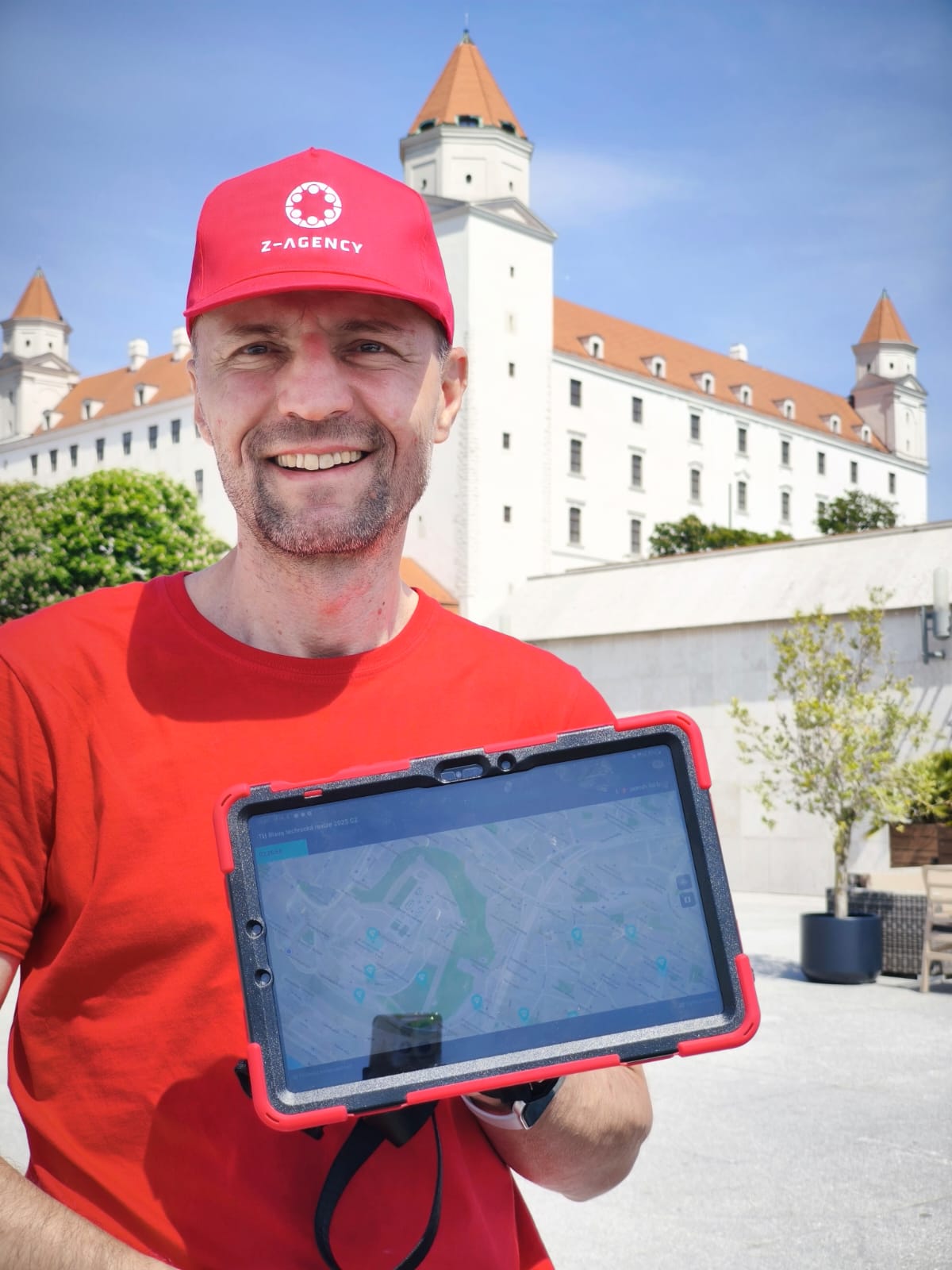
If you’re bringing a group to Bratislava, our Treasure Hunt Bratislava sends teams hunting for 30 hidden treasures across the Old Town, from the castle grounds down to the Danube. Most groups finish in 1.5 to 2.5 hours, starting from SNP Square or the fountain on Main Square.
Frequently Asked Questions
What was Bratislava called before?
Before 1919, the city went by different names depending on who was speaking: Pressburg in German, Pozsony in Hungarian, Prešporok in Slovak, and Prešpurk in Czech. All four names described the same place; they just reflected which language community was doing the naming.
When was Bratislava founded?
There’s no single founding date. A fortified settlement stood on the castle hill as far back as the 9th century, and the first written mention of a nearby stronghold, called Brezalauspurc, goes back to 907 AD, though historians still debate whether that name refers to this exact site. The city didn’t take the name Bratislava, or become Slovakia’s capital, until 1919.
Is Bratislava worth a day trip?
Yes, and it doesn’t take much planning. The Old Town is compact enough to see in half a day: castle, cathedral, a few gates and squares, and a walk along the Danube. Add the roughly one-hour train ride from Vienna, and it’s an easy trip even for visitors with limited time.
Jiri Zmidloch is the founder of TerraHunt. He designs city-based cipher games and walks every route himself before it goes live.
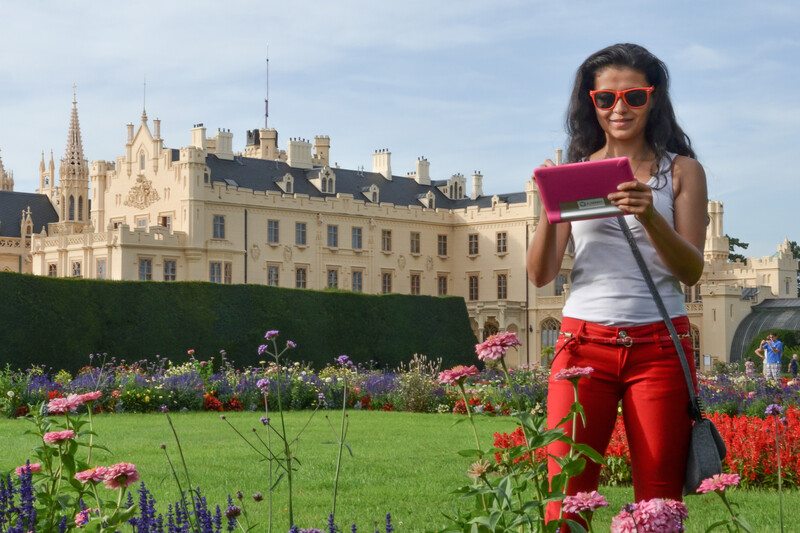
Treasure Hunt Lednice
Our instructors run the game with tablets, or you start it yourselves on your phones. Tell us the number of people and the date, we will get back to you the same day.
Bosonium or Istropolis?
Did you know that Bratislava has had a variety of both official and unofficial names throughout history? Among them are the previously mentioned Wratisslaburgium, Brezalauspurc, Presburch, Prešporek, Poson, Bosan, Bosonium, and Istropolis.
In gratitude for the recognition of the new state by the United States of America, there was also consideration to name it Wilsonovo. However, the name Bratislava, coined by Pavel J. Šafařík from the name Brecisburg, eventually prevailed.
How to make the most of your time in Bratislava? Perhaps with the team GPS game Treasure Hunt Bratislava.