Home · Blog · Play Geolocation Games: Your Brain Will Thank You!
Play Geolocation Games: Your Brain Will Thank You!
Geolocation games combine moving outdoors, solving tasks and teamwork, exactly what your brain needs. Here's how Treasure Hunt and other formats are played, how GPS works and how it all differs from geocaching.
What Are Geolocation Games
Geolocation games are games in which the player’s location decides the next step. A phone or tablet knows where the team is standing, and a question or task unlocks only at the right spot in the field.
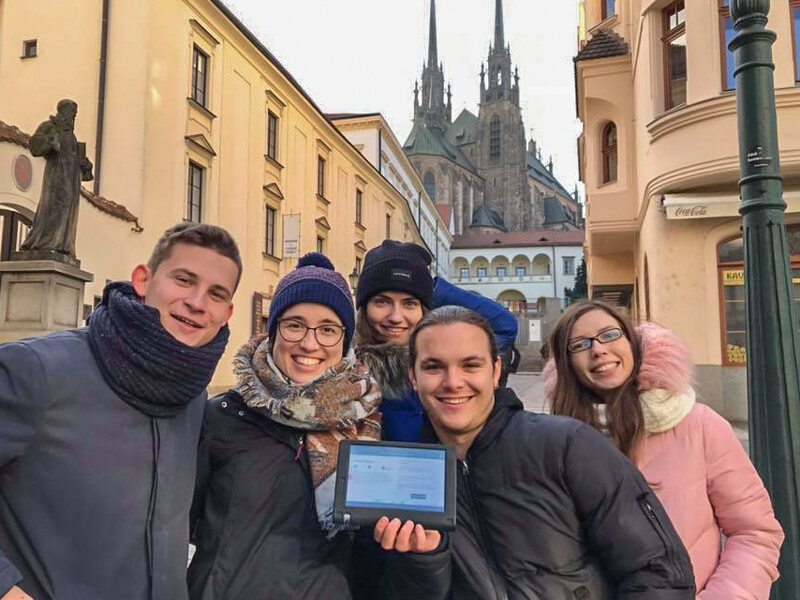
Team building geolocation games for companies are team activities in which colleagues have to communicate and solve tasks together. Families and friends on a trip play them the same way: instead of flipping through a guidebook, they look for treasures on the map.
Want a Healthy Brain? Use It!
Most adults don’t use all parts of their brain equally often or equally intensively.
And if they spend most of the day on easy or routine tasks only, their brain soon gets lazy and stops working at full capacity.
Yet using your brain’s full capacity leads to better intellectual performance, and it’s also a good investment in the future.
Actively engaging your brain can reduce the risk of forgetfulness and dementia, which often show up in old age.
Activities that stimulate intellectual activity also create new connections between brain cells.
The more of these active neural pathways your brain has, the better the chance it stays sharp even if some of them get damaged.
Beyond health, there are other reasons why it pays to use your mental capacity to the fullest.
When your brain faces new challenges, your memory and ability to concentrate improve, and that shows clearly in your productivity at work.
Frequent mental training can also support flexibility, creativity and problem-solving skills.
What Does the Brain Crave?
So how do you get your brain to use as much of its capacity as possible? Just give it enough new stimuli and tasks to work on.
You can vary mental stimulation through frequent social contact with interesting people, travel to unfamiliar places, learning new things, playing logic games and solving puzzles or other unusual tasks your brain doesn’t run into in everyday life.
Food for the Brain
Like every other organ in the body, the brain needs nutrients from food to function properly. Good blood flow is just as important, since it keeps the brain supplied with enough oxygen.
The best way to get there is regular, moderate-intensity aerobic activity that strengthens circulation, such as brisk walking or running.
How It’s Played
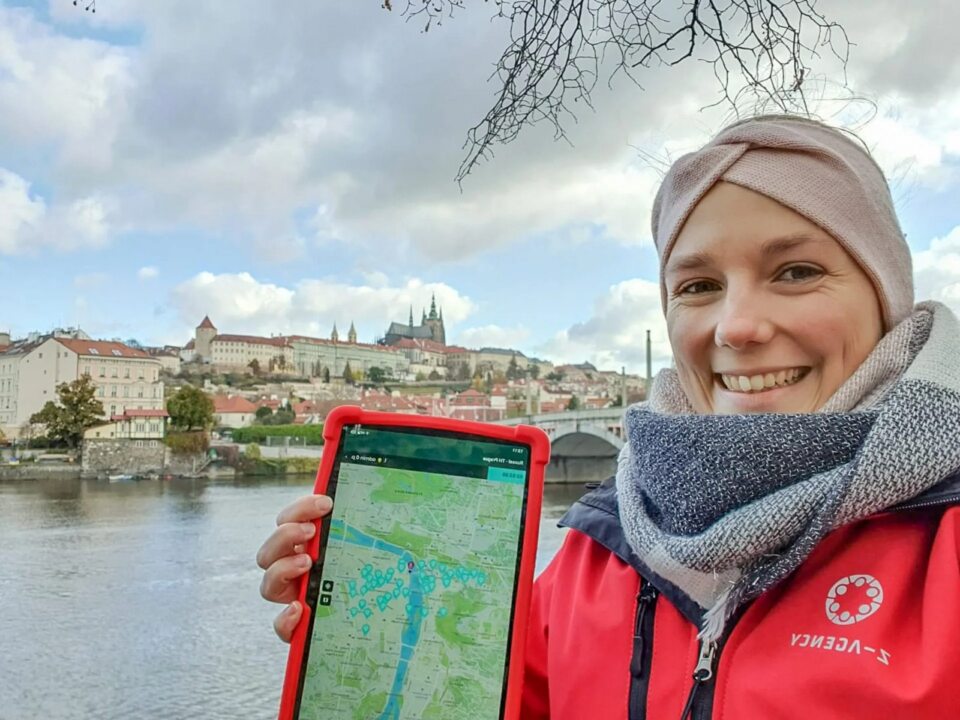
You play on tablets or phones with our GPS app. The screen shows a map with treasures; the team walks to them and answers questions right on the spot. Each game keeps a team busy for 2 to 3 hours, and the number of treasures doesn’t really matter: more treasures just means more room for strategy. Send us the date, location and number of people, and we’ll customize the game for you.
City games have questions tied to a specific place; story games are built on ciphers, riddles and brain teasers. The formats differ in how you see the treasures on the map and in what order you collect them:
- Treasure Hunt: all treasures are visible and the team picks the order. A good fit for teams that want to come up with their own strategy and go at their own pace.
- Challenge Tour: all treasures are visible and numbered, and they lead in a fixed order from start to finish. A good fit when the whole group should follow the same route and meet at the finish.
- Mystery Trail: only the next treasure is ever visible, the route is unknown in advance, and a wrong answer adds a penalty treasure. A good fit for teams that enjoy suspense and precise puzzle-solving.
Global Positioning System
GPS, short for Global Positioning System, determines geographic location to within a few meters and time to within a few nanoseconds. It was created for military purposes. Today it shapes both travel and the way games are played.
Assisted GPS
Mobile phones commonly use A-GPS, or assisted GPS. It determines location faster than the GPS system alone, so a Treasure Hunt game on a phone gives players faster and more accurate feedback on where they’re standing.
Other Positioning Systems
Besides GPS, there are also Russia’s GLONASS, Europe’s Galileo and China’s BeiDou. Each has its own characteristics and determines location with different methods; the right system depends on the user’s needs.
Not Just Starlink
Systems built mainly for telecommunications can also provide location information. They include SpaceX’s Starlink, Globalstar, Iridium, Inmarsat and Thuraya.
Higher Accuracy
The more precisely a phone pins down its location, the closer the game designer can hide a treasure: in a specific building, a room or even at a shelf in a library. That makes the game more realistic and pulls players in deeper.
Geolocation Games and Geocaching
Geocaching is the best-known relative of geolocation games. In geocaching, you search for a real container in the field, not a treasure on a screen. We cover it in detail in Geocaching: The Hunt for Treasures.
Out of Nowhere: The First Cache
The first cache was found on May 4, 2000, in the United States, back then under the name Great GPS Stash Hunt. The game got the name geocaching less than a month later.
The first cache in the Czech Republic appeared exactly a year later, in a nature reserve near Štramberk. The game spread quickly around the world.
A Walk with a Point
A cache is usually a waterproof container, such as a sealable plastic box with a logbook and a pen. The finder writes their name and the date in the logbook.
They can take an item from the container, but the custom is to leave something for the next person. Seekers, known as geocachers, end up in corners they’d otherwise never visit.
Rules of the Game
A basic cache sits at a spot given by GPS coordinates, which registered members find on the game’s website. With a mystery cache, riddles and ciphers lead to the correct coordinates; a multi-cache requires you to find several smaller caches first.
Anyone placing their own cache can’t put it on private property without the owner’s consent and has to keep it at least 161 meters from the next cache.
How Is It Different from Geocaching?
GPS guides both games. But they differ in what you look for, what you do on the spot and who creates the game:
- Goal: a geocacher looks for a physical container; in our games, a treasure is a point on the map on a tablet or phone that activates within a radius of roughly 10 to 40 meters.
- Task: at a cache, you sign the logbook; at a treasure, the team answers a question or solves a cipher tied to the location.
- Who plays: any registered geocacher can search for caches; our games are played by teams that have to communicate and solve tasks together.
- Who creates the game: a cache is placed by an experienced geocacher; TerraHunt games are created by our own team, which reviews the outdoor games regularly.
Frequently Asked Questions
Why Does It Pay to Train Your Brain?
New challenges improve memory and the ability to concentrate, which also shows in productivity at work. Activities that stimulate intellectual activity create new connections between brain cells.
How Do You Train Your Brain?
Give it plenty of new stimuli and tasks: social contact with interesting people, travel to unfamiliar places, new knowledge, logic games and puzzles. The brain also needs nutrients from food.
How Does Exercise Help the Brain?
It improves blood flow and oxygen supply. Regular, moderate-intensity aerobic activity that strengthens circulation works best, such as brisk walking or running.
Which Geolocation Games Are Good for Brain Training?
Treasure Hunt, Challenge Tour or Mystery Trail, for example. They combine solving logic tasks, social interaction and active movement in new, interesting places.
Treasure Hunt Prague
Our instructors run the game with tablets, or you start it yourselves on your phones. Tell us the number of people and the date, we will get back to you the same day.
Summary
- Geolocation games are games in which a question or task unlocks only at the right spot, which a phone or tablet recognizes by its location.
- Treasure Hunt shows all treasures and lets the team pick the order, Challenge Tour leads through numbered treasures from start to finish, and Mystery Trail shows only the next treasure.
- Mobile phones determine location faster thanks to assisted GPS, and besides GPS there are also the GLONASS, Galileo and BeiDou systems.
- Geocaching is about finding a physical container with a logbook; TerraHunt geolocation games are built on treasures on a map and team tasks right on the spot.
- Combining movement, logic tasks and social interaction gives the brain new stimuli that improve memory and concentration.
Want to try Treasure Hunt with colleagues or family? Send us your date and group size, and we'll pick the best game for you in the location where you want to play.