Home · Blog · GPS: How Pieces of Metal in Space Know Where You Are
GPS: How Pieces of Metal in Space Know Where You Are
American satellite system NAVSTAR GPS (Navigation Satellite Timing and Ranging Global Positioning System) is the most accurate navigation system available today. It is used to determine the precise position of a person, a device or basically anything else on our planet.
The Ministry of Defense of the United States of America developed this system for military purposes.
The goal was to track their army units and increase accuracy of targeting of weapons. In the 1980s, however, the US government decided to make the system accessible to the civilian population.
From then on, everyone can use it for their own purposes, even though the level of accuracy available is way lower than the one the US military can use.
This led to a rapid expansion of GPS navigation in many areas, such as tourism, transport, geodesy and more. Accurate positioning in space and time is achieved thanks to cooperation between its three cornerstones – the space, user and control segment.
The space segment
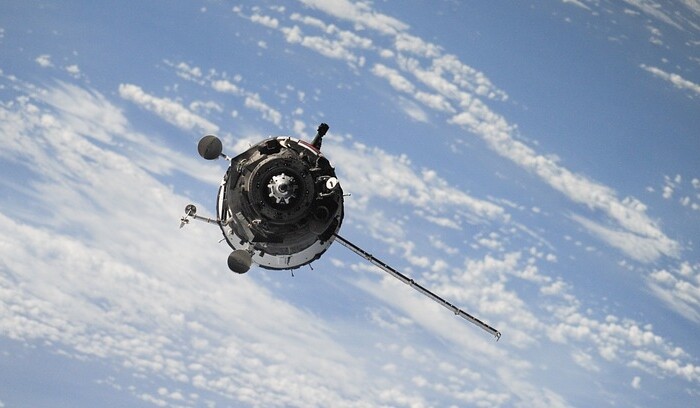
The space segment consists of 31 navigational satellites. They are orbiting the Earth at an altitude of approximately 20,200 km.
The satellites are irregularly distributed over six precisely defined circular paths and move at a speed of 3.8 kilometers per hour. Each sidereal day (which lasts 23 hours and 56 minutes) each satellite will circle the Earth twice.
Even though they can seem like dead pieces of metal, they are hard at work every minute of their life. They continually transmit information about their position and their technical condition.
Since each satellite has its unique number and code in which it beams this information back to us, it is easy to determine where the received signal was sent from.
The user segment
The user segment represents various types of passive reception and signal-processing equipment. All of these make sure that the user receives the information about their location.
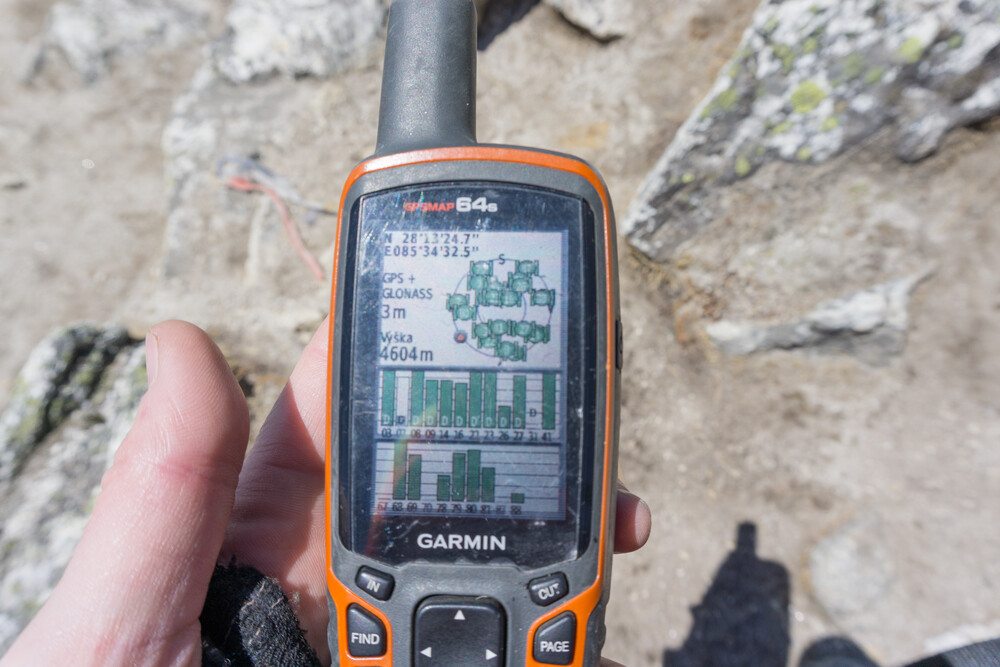
The orbits and distribution of the satellites are carefully optimized so that no matter where you are, you can receive a signal from at least four different satellites.
For the GPS receiver to determine its position, it needs to process data about the exact location of at least three satellites. Data from the fourth one is used to confirm the result.
If your receiver can capture a signal from more than four satellites, it can determine the position even more accurately. For example, in Czech Republic you can usually receive data from eight navigation satellites at one time.
Because GPS signals travels to every receiver from the orbit, their intensity on the Earth’s surface is very small. The receiver can best capture the satellite signal in open spaces, such as plains or fields.
On the contrary, it is hard to receive GPS signal inside buildings, underground, in the cities with skyscrapers or tall mountains.
The control segment
The third cornerstone of the GPS system is the so-called control segment. It consists of different types of control stations situated on Earth’s surface. They monitor and evaluate the signal from space satellites, maintain and manage the whole complex GPS system.
So next time the GPS on your phone saves you from getting lost in a new city or a forest, don’t forget to thank the lonely satellites on our orbit and the people who are taking care of them.
Treasure Hunt Prague
Our instructors run the game with tablets, or you start it yourselves on your phones. Tell us the number of people and the date, we will get back to you the same day.
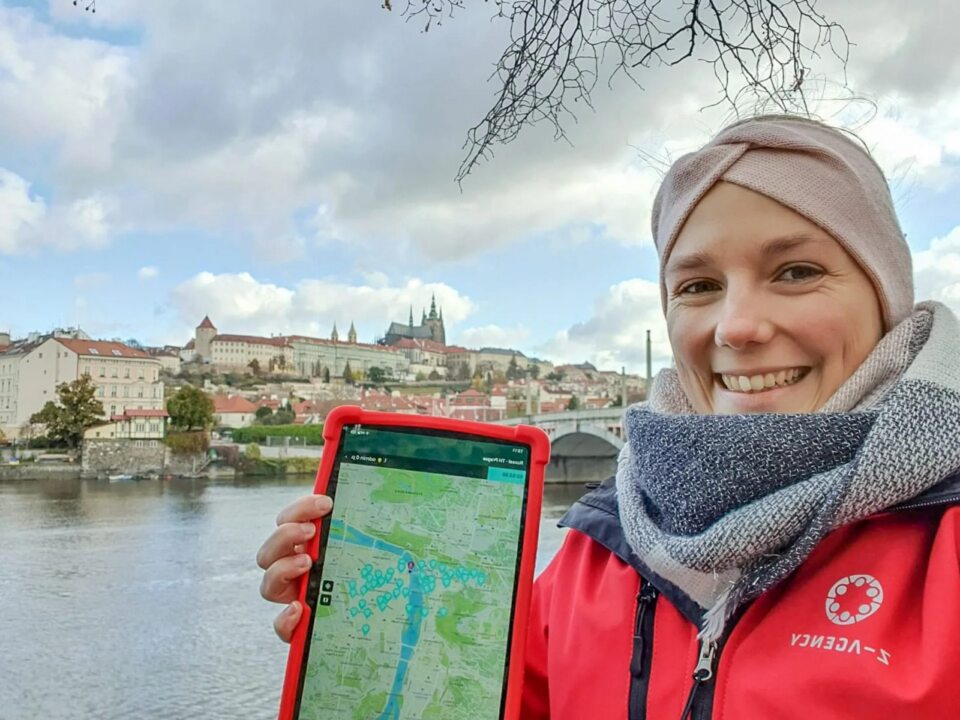
Using GPS in geolocation games
The Global Positioning System can be used freely, without paying any fees. It wasn’t long until this amazing technology found its use outside of military and business areas. One of them is geocaching, popular game of nature lovers and explorers.