Home · Blog · Vienna: Parks, Modern Architecture and Lesser-Known Places
Vienna: Parks, Modern Architecture and Lesser-Known Places
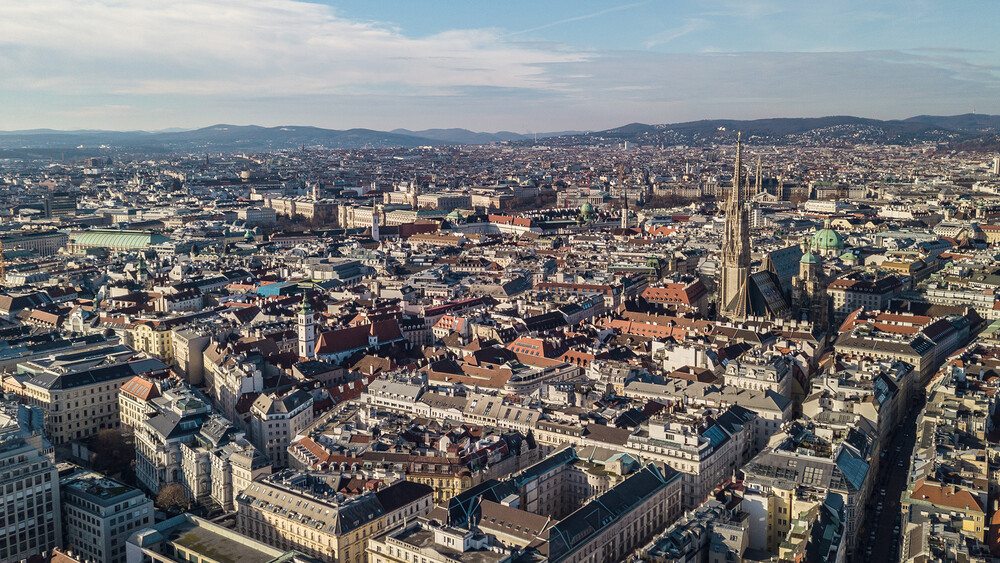
You can't see Vienna in a day. From the Hofburg and Schönbrunn to Donau City and the Gasometers, here are the parks, modern buildings and lesser-known places worth your time.
Origin of the Name
Where the name Vienna (Wien in German) comes from isn’t 100% certain. Many historians say it derives from the name of an ancient Slavic tribe, the Veneti or Vindi, who lived in the territory stretching from present-day Styria to the Danube. The first mention of the name dates back to the Roman Empire, which kept a military station on the site of today’s Vienna to guard the empire’s northern borders. That station was called Vindobona.
Don’t Miss These
If you’re heading to Vienna for a trip or a vacation, one day definitely won’t be enough. Vienna is a historic city with countless rare monuments and exceptional places. We start with a selection of the three most interesting ones, followed by parks, modern architecture and lesser-known places. Which places are they? Here they are:
Hofburg
Right in the middle of Vienna stands a palace complex whose construction began back in 1279. Until 1918, it was the seat of emperors and kings of the Habsburg dynasty; today the Hofburg is the residence of the Austrian president. A tour of the Hofburg includes not only the Habsburg crown jewels but also the iconic Sisi Museum.
Albertina
Art lovers and everyone else will enjoy the Albertina gallery, located right next to the Hofburg. The gallery is named after Albert of Saxe-Teschen, Maria Theresa’s son-in-law, a passionate art collector who founded it in 1768.
The gallery holds the world’s largest collection of prints and drawings, including originals by Michelangelo, Raphael, Leonardo, Rubens and Rembrandt.
Schönbrunn
The famous Schönbrunn Palace is a textbook example of a late Baroque imperial palace. It has 1,440 rooms, where up to a thousand people served at the height of the palace’s glory. The composer Wolfgang Amadeus Mozart was a frequent visitor to Schönbrunn, and the renowned French military leader Napoleon Bonaparte also held court there. A walk through the palace park in full bloom is well worth it, ideally with plenty of time to spare.
Vienna’s Parks
Vienna has 990 city parks. These six are among the best known, each with its own character: from an imperial garden to a university botanical collection.
Schönbrunn Palace Park
Schönbrunn Palace Park, together with the entire palace complex, is on the UNESCO World Heritage List. It connects directly to the palace, so you can easily combine a palace tour with a long walk.
Augarten
The 17th-century Augarten is the oldest surviving Baroque complex in Vienna. Thousands of rare European and exotic plants grow there.
Belvedere Gardens
The Belvedere Gardens are more than 300 years old and still showcase exceptional landscape architecture. They surround the Upper and Lower Belvedere.
Stadtpark
Stadtpark covers 95,931 square meters and dates from 1862. You’ll find meadows, ponds, ornamental shrubs and mature tree-lined avenues.
Dogs aren’t allowed in the park, so plan a different route if you’re bringing yours.
University of Vienna Botanical Garden
The University of Vienna Botanical Garden sits right next to the Belvedere Gardens. It’s home to more than 11,500 plant species from six continents.
The conifer collection is exceptional: you’ll see more than a hundred species of coniferous trees.
Volksgarten
The Volksgarten officially opened in 1823. The imperial family had it built specifically for the people of Vienna, and the park is open year-round.
Modern Architecture
Vienna isn’t just Baroque palaces. Contemporary architects have built boldly here, even a few steps from the oldest landmarks.
Donau City
Donau City is a new development on the left bank of the Danube and the most modern face of Viennese architecture. This city of skyscrapers lies just three kilometers from the historic center, is visible from far away and keeps growing.
It also includes UNO City, home to many international companies and institutions.
Hundertwasserhaus
The Hundertwasserhaus is a colorful apartment building designed by Vienna native Friedrich Hundertwasser. The architect loved irregularity and color, and flowers and shrubs grow right out of the building’s facade.
Haas-Haus
The Haas-Haus was designed by architect Hans Hollein. It started out as a furniture department store; today the building serves as an office center.
It’s controversial mainly because of its location directly opposite St. Stephen’s Cathedral.
Gasometers
Vienna’s four large gasometers were completed in 1896 by architect Franz Kapaun. They stand in the Simmering district near the Danube Canal and originally stored the coal gas Vienna used for street lighting.
University of Economics
The campus of Vienna’s University of Economics was designed by British architect Zaha Hadid. The new library and learning center, together with their surroundings, are a showcase of futuristic modernism.
Steirereck Restaurant
Steirereck stands in the middle of Vienna’s Stadtpark and is one of the world’s renowned culinary destinations. Its metal facade mirrors the surrounding park and blends in so perfectly that at first glance you can’t tell where the entrance is.
Lesser-Known Places
Beyond the Hofburg and Schönbrunn, Vienna has places that make it worth staying an extra day.
Jewish Museum
Vienna’s Jewish Museum, the oldest Jewish museum in the world, opened in 1896 and still operates today.
The biggest draw is the permanent exhibition on history after 1945 and the rebuilding of the Jewish community after World War II.
Imperial Crypt
The Imperial Crypt is located right downtown. A total of 146 Habsburgs are buried here, including twelve emperors and nineteen empresses.
The tour also explains the funeral ceremony, which used to be extremely lavish.
Naschmarkt
The Naschmarkt is a popular Viennese market where locals have been shopping for delicacies since the 16th century. Alongside local produce, you can taste treats from Italy, France and Vietnam, and you’ll find bistros, fast-food stands and restaurants.
You can get here by streetcar or subway.
Austrian Parliament
The Austrian Parliament was designed by Danish architect Theophil Hansen, and the building on the Ringstrasse was completed in 1883. The facade and the statue of Athena towering in front of the main entrance reveal its inspiration from ancient Greece.
Museum of Military History
The Museum of Military History is the oldest museum in the Austrian capital. It mainly displays weapons, uniforms and other military artifacts.
Because Austria long had a narrow strip of coastline, you’ll also see ship models and naval artifacts here.
With Kids
With kids, head to the Prater amusement park, whose traditional symbol is the giant Ferris wheel.
Treasure Hunt Vienna turns the city into a team game for families and corporate teams: on tablets or phones with our GPS app, you see all the treasures on the map and choose your own order.
The questions relate directly to the places you walk past, so you get to know Vienna from the street, not from a guidebook. Send us your date and start hunting for treasures.
Frequently Asked Questions
How many city parks are there in Vienna? Vienna has 990 city parks. The best known include Schönbrunn Palace Park, the Augarten, the Belvedere Gardens, Stadtpark, the University of Vienna Botanical Garden and the Volksgarten.
How many Habsburgs are buried in the Imperial Crypt in Vienna? A total of 146 Habsburgs are buried in the crypt, including twelve emperors and nineteen empresses. The crypt is located downtown.
What were Vienna’s gasometers used for? They stored the coal gas that Vienna once used for street lighting. The four large gasometers in the Simmering district were completed in 1896 by architect Franz Kapaun.
Where is the Donau City district in Vienna? Donau City stands on the left bank of the Danube. This city of skyscrapers lies just three kilometers from the historic center and includes UNO City.
Who designed the Austrian Parliament in Vienna? Danish architect Theophil Hansen, who drew inspiration from ancient Greece. The building on the Ringstrasse was completed in 1883.
Treasure Hunt Vienna
Our instructors run the game with tablets, or you start it yourselves on your phones. Tell us the number of people and the date, we will get back to you the same day.
Summary
- Vienna has 990 city parks, and Schönbrunn Palace Park, together with the palace, is on the UNESCO World Heritage List.
- Construction of the Hofburg began in 1279, and the Habsburgs resided there until 1918.
- Vienna's four gasometers in Simmering were completed in 1896 by architect Franz Kapaun.
- The Imperial Crypt holds 146 Habsburgs, including twelve emperors and nineteen empresses.
- Treasure Hunt Vienna shows all the treasures on a map on a tablet or phone, and each team chooses its own order.
Send us your date and group size, and you'll explore Vienna with your colleagues as the team game Treasure Hunt Vienna.