Skip to content

Home · Blog · Understanding What Is an Escape Room: A Complete Guide

Understanding What Is an Escape Room: A Complete Guide
AU Alžběta Umělá ·9 min read ·
Understanding What Is an Escape Room: A Complete Guide

Escape rooms have taken group entertainment to a whole new level. These immersive games now attract over 50 million participants each year worldwide. People expect some tricky puzzles and maybe a race against the clock, but the biggest surprise is how these experiences teach communication, teamwork, and problem solving skills in ways that go way beyond traditional fun and games.

Table of Contents

Quick Summary

Takeaway Explanation
Escape rooms foster teamwork and communication. They require players to collaborate under time constraints, enhancing interpersonal skills crucial in professional settings.
Diverse puzzles engage multiple cognitive skills. Challenges promote critical thinking and problem solving through various logical and physical interactions, enhancing mental agility.
Escape rooms provide immersive learning experiences. They create an engaging environment that encourages experiential learning and practical application of theories.
Technological advancements are shaping future escape rooms. Innovations like virtual reality and AI are transforming traditional escape rooms into dynamic learning platforms for organizations.
They help identify and develop leadership potential. Escape rooms offer insights into team dynamics, highlighting individual strengths and leadership capabilities in a low-pressure setting.

Defining Escape Rooms: The Basics

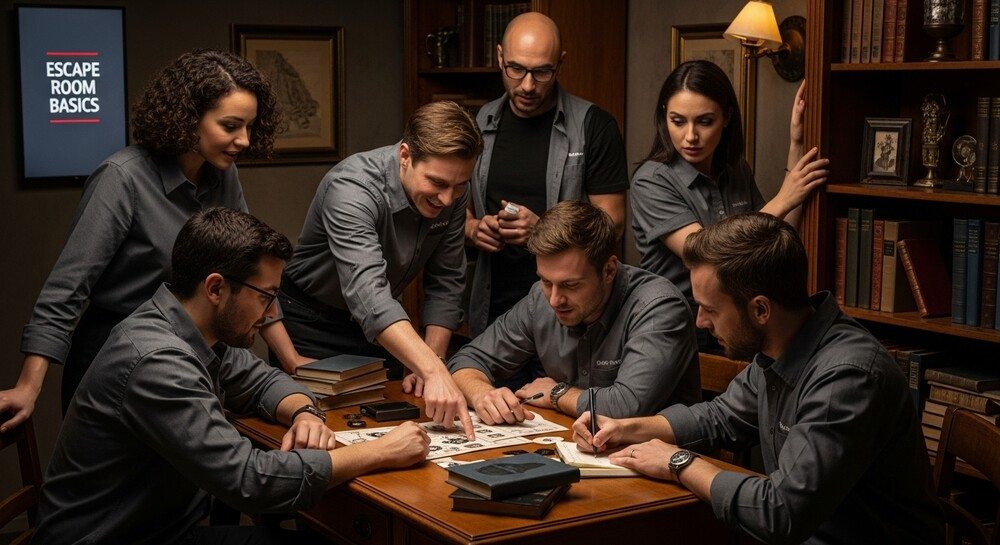
Escape rooms represent an innovative interactive entertainment experience that transforms problem solving into an immersive adventure. At their core, these are physical adventure games where participants are “locked” inside a themed room and must work collaboratively to solve a series of puzzles, find hidden clues, and ultimately escape within a specified time limit.

What Makes an Escape Room Unique

Unlike traditional games, escape rooms create a three-dimensional, narrative-driven environment that challenges participants mentally and socially. According to research from educational technology studies, these experiences are structured to foster critical thinking, communication, and teamwork through engaging gameplay mechanics.

Key characteristics of escape rooms include:

  • Immersive storylines that transport players into different scenarios
  • Time-sensitive challenges that create urgency and excitement
  • Collaborative problem solving requiring collective intelligence
  • Diverse puzzle types ranging from logical to physical interactions

The Psychology Behind Escape Room Experiences

Escape rooms tap into fundamental human desires for challenge, discovery, and collective achievement. They provide a controlled environment where participants can experience problem solving as a social, interactive processScientific research on experiential learning suggests these experiences activate multiple cognitive skills simultaneously, making them more than just entertainment.

Interested in exploring more about the fascinating world of escape games? Check out our comprehensive guide on game development to understand how these immersive experiences are crafted.

Story-driven escape games — outdoors, indoors or online, wherever your team sits.
Browse the games

The Importance of Escape Rooms in Team Building

Escape rooms have emerged as a powerful tool for organizations seeking innovative approaches to team development and interpersonal skill enhancement. These immersive experiences go far beyond traditional team building activities by creating complex, interactive scenarios that demand genuine collaboration and strategic thinking.

Developing Critical Professional Skills

In corporate environments, escape rooms serve as dynamic training platforms that simultaneously assess and improve crucial workplace competencies. According to research from multicultural team studies, these experiences provide unprecedented insights into team dynamics, communication patterns, and problem solving strategies.

Key professional skills enhanced through escape room experiences include:

Below is a table summarizing the key professional skills enhanced through escape room experiences as discussed in the article.

Professional Skill How Escape Rooms Build It
Effective Communication Requires clear information sharing and active listening under time pressure
Collaborative Problem Solving Fosters group problem-solving through interactive, shared challenges
Leadership and Role Distribution Offers opportunities to take initiative and assign tasks based on strengths
Stress Management and Adaptability Simulates high-pressure scenarios demanding calmness and quick adjustment
Creative Thinking and Innovation Encourages out-of-the-box approaches to overcome unique or abstract challenges
  • Effective communication under time pressure
  • Collaborative problem solving techniques
  • Leadership and role distribution
  • Stress management and adaptability
  • Creative thinking and innovation

Psychological Benefits of Collaborative Challenges

Escape rooms create controlled environments where team members can observe and develop interpersonal skills without the traditional hierarchical workplace constraints. They reveal individual strengths, communication styles, and potential leadership capabilities in a low-stakes, engaging context.

By presenting complex, multi-layered challenges, these experiences encourage participants to transcend typical workplace interactions.

Teams learn to leverage diverse perspectives, negotiate solutions, and build mutual trust through shared accomplishment.

Explore our large group escape game options to understand how these experiences can be scaled for different organizational needs and team sizes.

How Escape Rooms Facilitate Problem Solving

Escape rooms represent sophisticated cognitive training environments that transform problem solving from an abstract concept into a dynamic, interactive experience. These immersive scenarios challenge participants to apply critical thinking skills in realistic, high-pressure situations that mirror complex real-world problem solving strategies.

Cognitive Mechanisms of Problem Solving

Problem solving in escape rooms operates through multilayered cognitive processes that engage participants beyond traditional learning methodologies. According to research in educational gaming, these experiences activate multiple cognitive domains simultaneously, creating a comprehensive learning environment that develops advanced mental skills.

Key cognitive mechanisms activated during escape room challenges include:

  • Sequential reasoning and logical deduction

  • Pattern recognition and information synthesis

  • Adaptive thinking under time constraints

  • Hypothesis testing and quick validation

  • Nonlinear approach to complex challenges

Strategic Thinking and Metacognitive Development

Escape rooms function as structured problem solving laboratories where participants learn to manage cognitive resources effectively. By presenting intricate puzzles that require collective intelligence, these experiences teach individuals how to distribute cognitive load, communicate complex ideas, and develop shared mental models.

The multifaceted nature of escape room challenges ensures that problem solving is not just about finding solutions, but understanding the underlying thought processes that lead to successful outcomes. Participants learn to deconstruct complex problems, identify critical information, and develop flexible strategic approaches.

Discover the most engaging escape room topics that can maximize cognitive development and problem solving skills.

Key Elements and Themes in Escape Rooms

Escape rooms are meticulously designed experiences that blend storytelling, puzzle mechanics, and immersive environments to create compelling narrative challenges. Each escape room is a carefully constructed universe with intricate design elements that engage participants on multiple sensory and cognitive levels.

Structural Components of Escape Room Design

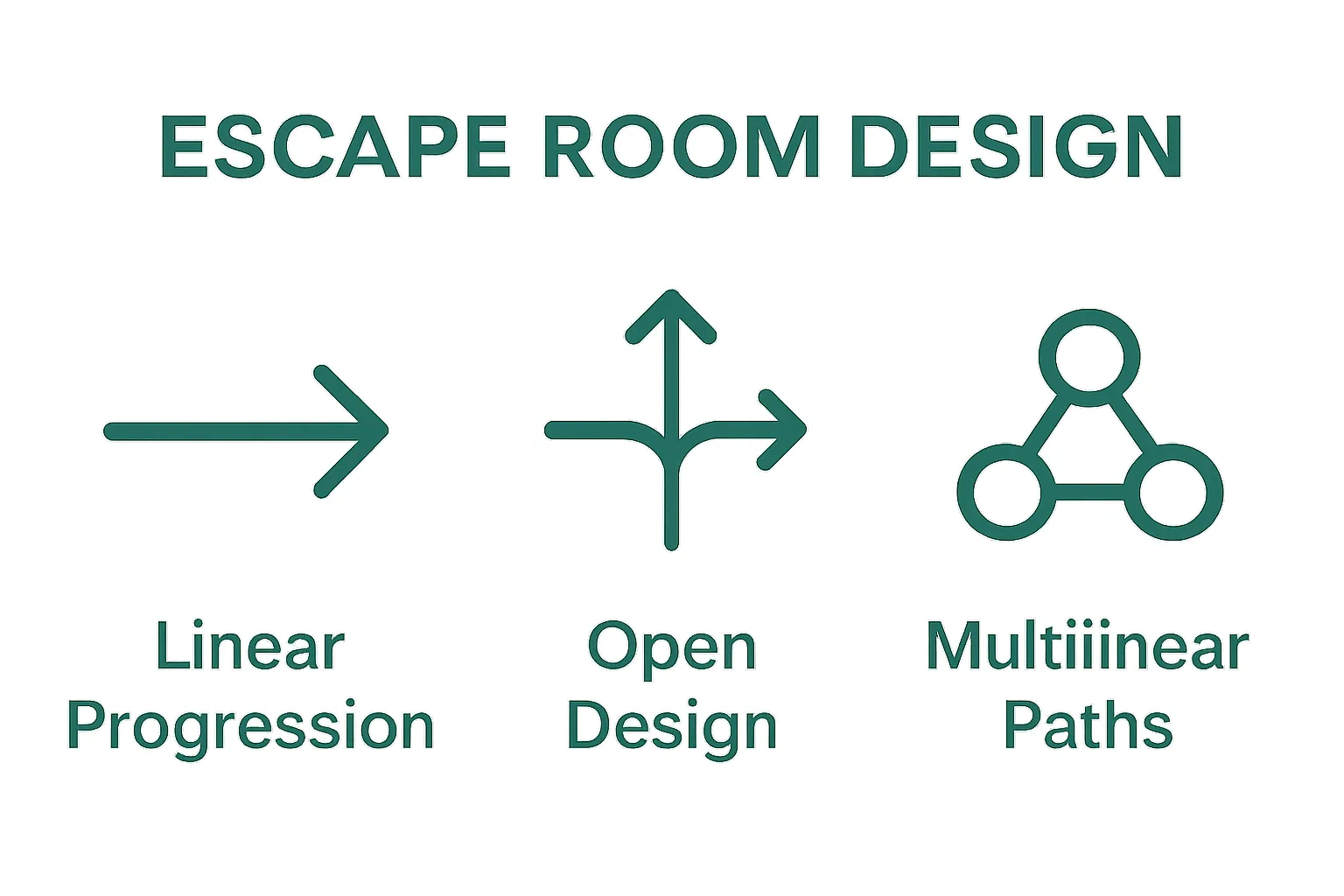
The architecture of an escape room involves sophisticated interplay between physical space, narrative context, and strategic puzzle placement. According to research on interactive game design, these experiences are typically structured through several critical design approaches:

  • Linear progression where puzzles are solved sequentially

  • Open design allowing multiple simultaneous puzzle solving

  • Multilinear paths with interconnected challenge networks

Critical physical elements frequently incorporated include:

  • Padlocks and combination mechanisms

  • Hidden compartments and secret passages

  • Encrypted messages and coded communication systems

  • Interactive technological interfaces

  • Thematic props that serve both narrative and puzzle functions

Narrative and Thematic Diversity

Escape rooms transcend mere puzzle solving by embedding rich storytelling frameworks. Themes range from historical recreations and scientific scenarios to horror experiences and fantasy adventures. These narratives serve not just as background decoration but as fundamental drivers of participant engagement and motivation.

The most compelling escape rooms create immersive worlds where every object potentially holds narrative significance. Participants are transformed from passive observers into active protagonists, solving challenges that directly advance the overarching story.

Explore the most popular escape room themes and topics to understand the creative diversity of these interactive experiences.

The Future of Escape Rooms in Events and Corporate Settings

Escape rooms are rapidly evolving from niche entertainment experiences into sophisticated tools for organizational development, training, and strategic team engagement. The convergence of technology and interactive storytelling is transforming these immersive environments into powerful platforms for skill assessment, learning, and professional growth.

Technological Integration and Innovation

Modern escape rooms are transcending physical limitations through advanced technological implementations. According to research on augmented reality escape rooms, emerging technologies are creating unprecedented opportunities for collaborative problem solving and social interaction.

Key technological trends reshaping escape room experiences include:

This table outlines the main technological trends that are shaping the evolution of escape room experiences in the corporate and event space.

Technology Trend Impact on Escape Rooms
Augmented and Virtual Reality Enhances immersion and allows for new types of puzzles and environments
AI Driven Personalized Challenges Adapts puzzles to group skill level and provides tailored experiences
Remote and Hybrid Participation Enables teams in different locations to play together in real time
Advanced Analytics for Skill Assessment Tracks performance and provides data-driven insights into team dynamics
Adaptive Difficulty Scaling Adjusts challenge complexity for varied skill sets and learning goals
  • Augmented and virtual reality integration

  • AI driven personalized challenge generation

  • Remote and hybrid participation models

  • Advanced analytics for skill assessment

  • Adaptive difficulty scaling

Strategic Applications in Professional Development

Escape rooms are becoming sophisticated assessment and training platforms that offer nuanced insights into team dynamics, individual capabilities, and organizational potential. By creating controlled yet complex scenarios, businesses can evaluate critical professional competencies such as communication, leadership, and collaborative problem solving.

The most innovative organizations are utilizing escape room methodologies to:

  • Identify emerging leadership talent

  • Develop cross functional communication skills

  • Create immersive onboarding experiences

  • Design complex scenario based training programs

  • ​Measure team resilience and adaptability

​ Discover strategies for expanding virtual event portfolios and leverage the transformative potential of interactive experiences.

Unlock a New Level of Team Building with TerraHunt

Struggling to find powerful, interactive experiences that truly boost communication, problem solving, and teamwork among your people? As explored in our guide to escape rooms, these immersive adventures do more than entertain.

They foster critical thinking, adaptability, and genuine collaboration in high-pressure scenarios. Yet, organizing such tailored events for diverse, remote, or large teams can feel nearly impossible.

Now is the time to turn this challenge into an opportunity with TerraHunt. Our unique platform delivers engaging activities like virtual escape games and outdoor treasure hunts that easily adapt to any setting—from bustling city centers to remote online teams. Whether you aim to transform traditional group interactions or run events for participants across continents, TerraHunt.com empowers you with scalable, theme-rich solutions designed for results.

Step into active team building rooted in immersive gameplay and take your next event beyond expectations. Visit TerraHunt.com today and discover how easy impactful engagement can be.
Want to try it out?

Treasure Hunt Prague

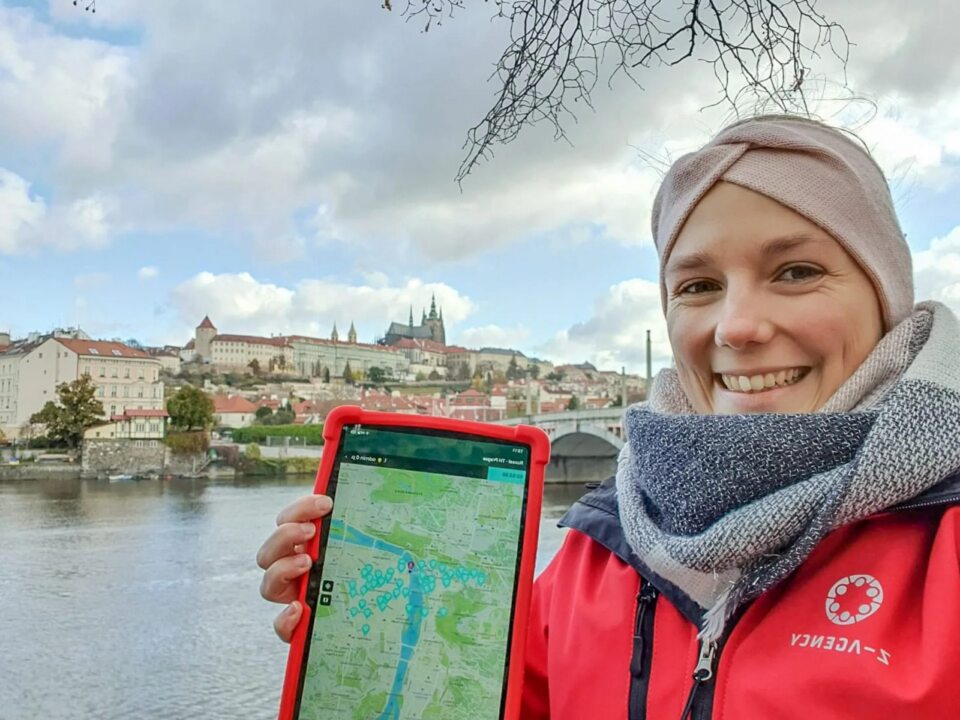
Our instructors run the game with tablets, or you start it yourselves on your phones. Tell us the number of people and the date, we will get back to you the same day.
Treasure Hunt Prague
What to take away

Frequently Asked Questions

What is an escape room?

Escape rooms are physical adventure games where participants are locked in a themed room and must solve puzzles, find clues, and escape within a time limit.

How do escape rooms promote teamwork and collaboration?

Escape rooms require participants to work together to solve challenges, enhancing communication, collaboration, and problem-solving skills in a fun and immersive environment.

What types of puzzles can be found in escape rooms?

Escape rooms feature a variety of puzzles that can include logical challenges, physical interactions, pattern recognition, and hidden clues, all designed to foster critical thinking and teamwork.

How can escape rooms benefit corporate team-building activities?

Escape rooms provide an engaging platform for companies to develop essential professional skills such as effective communication, leadership, stress management, and creative problem-solving in a low-stakes environment.
 

From the blog

What Others Read Most

Keep reading

You Might Also Like…

Understanding Virtual Escape Room Benefits for Teams
Development

Understanding Virtual Escape Room Benefits for Teams

Virtual escape rooms have redefined how teams connect from miles apart. Teams worldwide are now diving into immersive puzzles together and virtual escape rooms have soared in popularity by 200 percent since 2020.

What might surprise you is that this surge is not just about fun but about unlocking real psychological and social benefits that can reshape how teams collaborate.

Read →
Digital Escape Rooms: Everything You Need to Know
Games

Digital Escape Rooms: Everything You Need to Know

Many organizations now use digital escape rooms to build teams and sharpen skills. These immersive online adventures have quickly moved from simple games to powerful tools for learning and collaboration.

Whether you are leading a company or teaching a class, understanding how digital escape rooms work can reveal new ways to boost engagement, critical thinking, and teamwork in any setting.

Read →
Complete Guide to Why Virtual Escape Games
Education

Complete Guide to Why Virtual Escape Games

Did you know that digital escape rooms can do more than entertain? A 2025 study found they significantly boost environmental knowledge and encourage eco-friendly habits. Virtual escape games are attracting people and organizations alike because they mix teamwork, problem-solving, and compelling stories, all without physical walls.

As technology connects us across distances, these experiences have become a favorite choice for teams aiming to learn, collaborate, and fully engage together online.

Read →
Ready to talk?

Write to Us and We Will Get Back to You Today

We process your data in line with our privacy policy.

Companies That Play with Us

Andrea Lukáčová July 2026
Rated 5 out of 5

Very well-organized and fun game, we enjoyed a lot! :)

Šárka Šimková June 2026
Rated 5 out of 5

We were very happy with the agency. They accommodated everything we asked for. The Treasure Hunt game was a big hit with our colleagues.

Nikola Hladikova June 2026
Rated 5 out of 5

Our whole team really enjoyed it. Perfectly prepared and great hosting. Excellent communication from start to finish. Thank you so much for a great experience.

Patricie Waisrova May 2026
Rated 5 out of 5

For our team building we used the online version of the Sherlock Holmes Treasure Hunt and everyone really enjoyed the activity. Many thanks for the organization — the checkpoint placement and trivia questions all turned out great!

Lenka Černá May 2026
Rated 5 out of 5

I would like to thank you once again for a perfectly prepared event. It was truly amazing and we all enjoyed it very much. The organization was flawless and even the weather worked out, so everything went just great.

Petra Justová May 2025
Rated 5 out of 5

Thank you for organizing the Treasure Hunt in Mikulov. I have not a single complaint about the organization. The event was perfectly prepared and this type of game draws in even the less active participants.

BDO Czech Republic August 2024
Rated 5 out of 5

A fantastic team game in a beautiful setting. It engaged all age groups. Creative questions tied to the location. We really enjoyed the game. We recommend it!

Jan Mádl March 2024
Rated 5 out of 5

Complete satisfaction with the Treasure Hunt organization. It was interactive, and being able to watch the other teams' positions and the live standings made it very motivating. Great work.

Read all references →