Skip to content

Home · Blog · Complete Guide to the Team Collaboration Process

Complete Guide to the Team Collaboration Process

AU Alžběta Umělá ·7 min read ·
Complete Guide to the Team Collaboration Process

Nearly 70 percent of professionals believe effective team collaboration drives project success. When teams synchronize their efforts, they turn individual strengths into exceptional outcomes. Collaboration shapes everything from daily workflow to long-term achievement, making or breaking results in any organization. Understanding how teams coordinate, communicate, and resolve challenges sheds light on what it really takes for groups to thrive in today’s fast-paced work environment.

Key Takeaways

Point Details
Effective Collaboration Teams achieve extraordinary results through shared goals, interdependence, and open communication, developing a cohesive unit that transcends individual talents.
Collaboration Models Organizations should strategically choose from various team formation and technological collaboration models to maximize strengths and adaptability in teamwork.
Development Stages Team progression through the forming, storming, norming, and performing stages is essential for successful collaboration, requiring structured guidance and support.
Roles and Challenges Clearly defined roles and proactive management of potential collaboration pitfalls are crucial to enhancing team effectiveness and maintaining harmony.

Table of Contents

Defining the Team Collaboration Process

At its core, team collaboration is more than just people working together. According to Wikipedia’s research on teamwork, it represents a sophisticated dance of interdependent individuals pursuing a shared objective. Think of it like an orchestra – each musician plays a unique part, but the magic happens when they synchronize perfectly.

The fundamental dynamics of effective team collaboration include:

  • Shared Goals: A clear, unified vision that everyone understands and commits to
  • Interdependence: Recognizing that each team member’s performance impacts collective outcomes
  • Defined Roles: Crystal clear responsibilities that prevent overlap and confusion
  • Open Communication: Transparent, frequent interactions that foster trust and alignment

Successful collaboration isn’t about individual brilliance, but how those individual talents merge into a cohesive whole. It requires strategic coordination, mutual respect, and a commitment to collective achievement. Professional teams transform individual skills into extraordinary results by creating environments where communication flows freely and everyone understands their unique contribution to the larger mission.

The most effective collaboration processes aren’t rigid – they’re adaptive. They allow for flexibility while maintaining a structured approach that keeps everyone moving in the same direction. By establishing clear expectations, promoting psychological safety, and celebrating collective achievements, teams can unlock extraordinary potential that far exceeds what any individual could accomplish alone.

Types of Team Collaboration Models

Team collaboration models are diverse frameworks that organizations use to structure and optimize group interactions. According to research on collaborative methods, teams can form through multiple approaches, each with unique characteristics and strategic advantages.

Formation Models

Here’s a comparison of team collaboration formation models and their key features:

Model Type How Teams Are Formed Key Advantages
Chance Collaboration Random member selection Diverse ideas
Spontaneity
Acuity Collaboration Skills matched intentionally Balanced strengths
Efficiency
Interest-Based Shared passions or goals High engagement
Motivation
Leader-Selected Handpicked by leadership Strategic fit
Clear direction
  • Chance Collaboration: Random team assembly where members are brought together without specific pre-planning
  • Acuity Collaboration: Deliberately balanced teams where skills complement each other precisely
  • Interest-Based Collaboration: Teams formed around shared passions, objectives, or professional interests
  • Leader-Selected Collaboration: Strategically curated teams where leaders handpick members based on specific criteria

Technological Collaboration Formats

In our increasingly digital world, virtual collaboration research highlights two primary interaction models:

  1. Synchronous Collaboration: Real-time interactions through:
  • Video conferencing
  • Instant messaging
  • Live collaborative platforms
  1. Asynchronous Collaboration: Distributed interactions through:
  • Email exchanges
  • Shared document repositories
  • Discussion forums
  • Project management tools

The most successful teams understand that collaboration isn’t one-size-fits-all. They strategically blend different models, leveraging technology and human dynamics to create flexible, adaptive work environments that maximize collective potential. By understanding these collaboration models, organizations can design more effective teams that transcend traditional workplace boundaries.
 

Essential Stages of Effective Collaboration

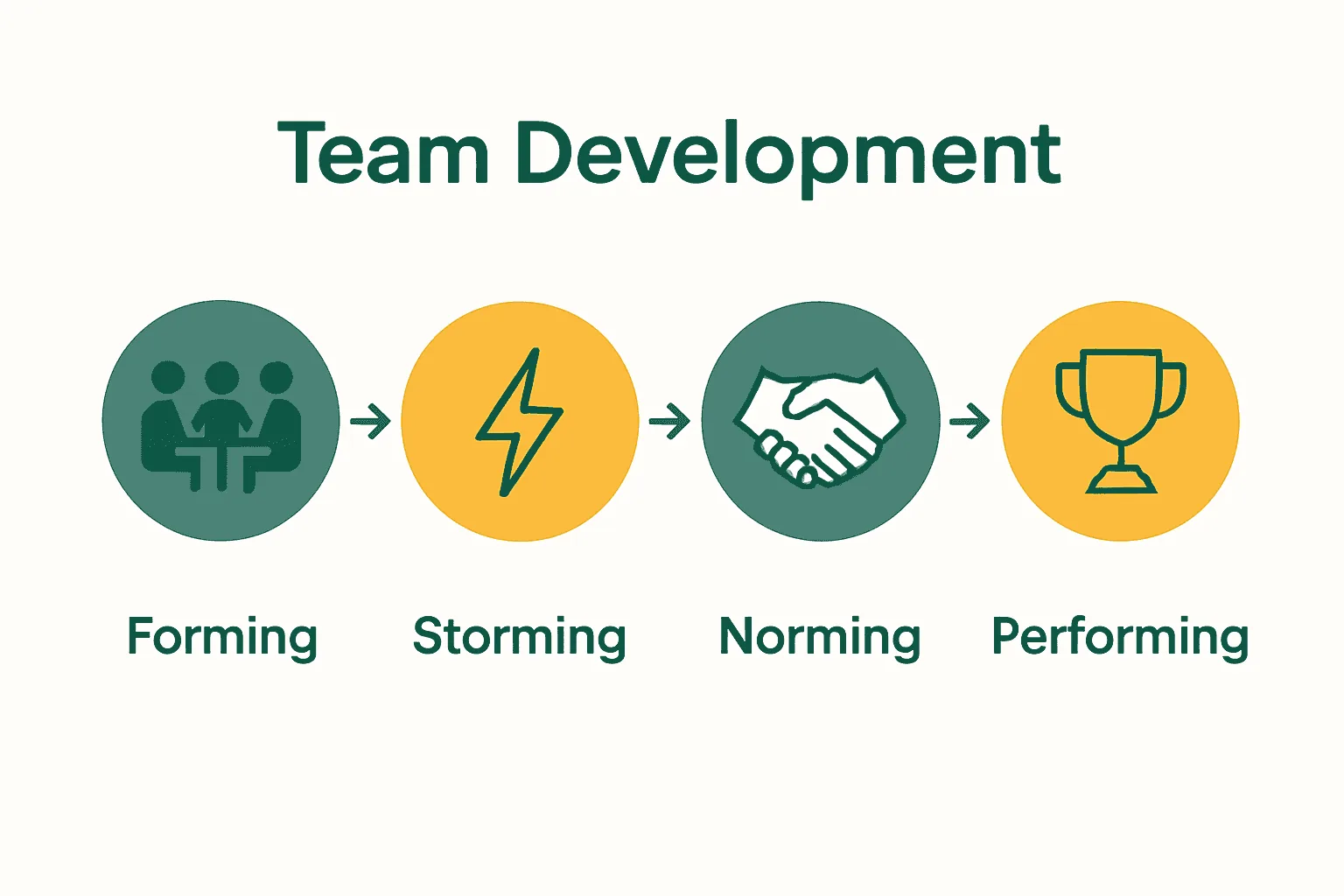
Successful team collaboration isn’t a spontaneous event but a structured journey through predictable stages. According to Tuckman’s renowned team development model, teams progress through critical phases that transform individual contributors into a cohesive, high-performing unit.

Team Development Stages

  1. Forming Stage: Initial team assembly
  • Members get acquainted
  • Tentative interactions
  • Exploring team dynamics
  • Understanding individual roles
  1. Storming Stage: Navigating initial conflicts
  • Challenging established ideas
  • Negotiating team roles
  • Managing different work styles
  • Establishing communication protocols
  1. Norming Stage: Establishing team rhythm
  • Developing shared understanding
  • Creating collaborative norms
  • Building mutual trust
  • Aligning team expectations
  1. Performing Stage: Peak collaborative productivity
  • Seamless teamwork
  • High efficiency
  • Innovative problem-solving
  • Achieving collective goals

Drawing from collaborative research methodologies, effective collaboration also requires structured project management. The comprehensive collaboration process typically involves:

  • Conceptualization: Generating and refining initial ideas
  • Proposal Preparation: Detailed project planning
  • Project Management: Coordinating resources and activities
  • Implementation: Executing planned strategies
  • Evaluation: Assessing progress and outcomes
  • Dissemination: Sharing results and insights

Understanding these stages helps teams navigate complex collaborative environments, transforming potential friction into productive momentum.
By recognizing and intentionally moving through these phases, teams can optimize their collective potential and achieve extraordinary results.

Key Tools and Technologies for Teams

Team collaboration technologies have revolutionized how professionals work together. Global market research reveals the collaboration tools market is experiencing explosive growth, valued at USD 23.75 billion and expanding rapidly due to cloud technologies and AI integration.

Communication Platforms

Effective team tools typically encompass multiple functional categories:

  • Messaging Applications

    • Real-time communication
    • Instant file sharing
    • Channel-based discussions
  • Video Conferencing Tools

    • Virtual meeting spaces
    • Screen sharing capabilities
    • Recording and transcription features

Productivity and Management Technologies

According to Agile project research, key collaboration platforms like Slack, Microsoft Teams, and Confluence provide critical capabilities for modern teams:

  1. Task Coordination: Centralized project tracking
  2. Knowledge Sharing: Documented workflows and resources
  3. Transparent Communication: Open information exchange
  4. Iterative Development: Continuous improvement mechanisms

The most powerful collaboration technologies now integrate artificial intelligence, enabling predictive task management, automated workflow optimization, and intelligent communication routing. By selecting tools that match specific team needs, organizations can create seamless, efficient work environments that transcend traditional communication barriers. Discover more about innovative team building technologies that can transform your collaborative approach.

Roles, Responsibilities, and Common Pitfalls

Team effectiveness hinges on clear role definition and understanding potential collaboration challenges. According to research on teamwork dynamics, successful teams require precise role allocation and awareness of potential interpersonal obstacles.

Critical Team Role Characteristics

Effective team roles typically involve:

  • Strategic Contributors: Members bringing unique expertise
  • Coordination Specialists: Individuals managing workflow and communication
  • Problem Solvers: Team members adept at resolving complex challenges
  • Execution Experts: Those responsible for implementing specific tasks

Common Collaboration Challenges

Research exploring team dynamics highlights several significant pitfalls teams must navigate:

  1. Social Loafing: Situations where individuals reduce personal effort
  2. Behavioral Conflicts: Interpersonal tensions disrupting team harmony
  3. Role Ambiguity: Unclear expectations and responsibilities
  4. Task Misalignment: Inappropriately distributing work across the team

Mitigating Team Challenges

Insights from collaborative research suggest that progression through team development stages requires strategic intervention. Teams must proactively address potential conflicts, establish clear communication protocols, and create environments that encourage collective accountability.

Successful teams transform potential obstacles into opportunities for growth. By understanding individual strengths, maintaining transparent communication, and fostering a culture of mutual respect, organizations can build resilient, high-performing collaborative units. Learn more about advanced team building strategies to elevate your team’s potential.

Transform Your Team Collaboration Into Lasting Success

Struggling to get your team truly in sync? If you recognize the challenges of misaligned roles, unclear communication, and the difficulty of building trust described in our “Complete Guide to the Team Collaboration Process,” then you are not alone. Many organizations know what good teamwork looks like in theory, but find it much harder to put into practice. Lack of shared goals, weak engagement, and inconsistent processes often leave even talented teams underperforming. Now is the time to elevate your team’s collaboration with practical solutions designed for the demands of today’s flexible, remote, and hybrid work environments.

Experience collaboration that goes beyond the basics. At TerraHunt, you will find innovative, interactive team building activities built on proven collaboration models. Whether you want to strengthen communication, reinforce defined roles, or build trust, our outdoor treasure hunts, virtual escape rooms, and hybrid games are designed to address your unique collaboration pain points.

Explore our virtual team building solutions to experience new team dynamics or get inspired by the wide range of event options for teamwork. Take the next step – visit TerraHunt.com today to discover activities that can empower your team and turn collaboration theory into real-world results.
Want to try it out?

Treasure Hunt Carlsbad

Our instructors run the game with tablets, or you start it yourselves on your phones. Tell us the number of people and the date, we will get back to you the same day.

Treasure Hunt Carlsbad
What to take away

Frequently Asked Questions

What is the team collaboration process?

The team collaboration process involves individuals working together toward a common goal, utilizing shared objectives, defined roles, open communication, and interdependence to achieve extraordinary results.

What are the key types of team collaboration models?

The main types of team collaboration models include chance collaboration, acuity collaboration, interest-based collaboration, and leader-selected collaboration, each with unique methods of forming teams and associated advantages.

What are the essential stages of effective collaboration?

The essential stages of effective collaboration include forming, storming, norming, performing, concept development, proposal preparation, project management, implementation, evaluation, and dissemination.

What technologies are commonly used for team collaboration?

Common technologies for team collaboration include messaging applications for real-time communication, video conferencing tools for virtual meetings, and productivity platforms like Slack and Microsoft Teams that facilitate task coordination and knowledge sharing.

 

From the blog

What Others Read Most

Keep reading

You Might Also Like…

Step By Step Team Building Event for Corporate Success
Development

Step By Step Team Building Event for Corporate Success

Only about 30 percent of employees feel truly engaged during typical team building events, revealing a huge opportunity for improvement. When your team returns from an activity feeling unchanged, time and resources have gone to waste.

By following a structured approach that targets real challenges and measurable goals, you set the stage for stronger collaboration, higher morale, and long-term organizational growth.

Read →
7 Practical Team Building Ideas for Corporate Success
Development

7 Practical Team Building Ideas for Corporate Success

Did you know that companies investing in team building see a 50% boost in employee communication and collaboration? Whether your team works together in-person, remotely, or both, fostering genuine connections can transform productivity and workplace culture.

Discover how creative, interactive activities, ranging from outdoor adventures to digital challenges, break down barriers and reveal hidden strengths in every member of your team.

Read →
Understanding Team Building Tips for Leaders
Development

Understanding Team Building Tips for Leaders

Team building gets talked about a lot in leadership circles and for a good reason. When companies make it a real priority, the results are huge. High-performing teams are actually 20-25% more productive when leaders invest in deliberate team development approaches. Most people think team building is just about trust falls and icebreakers. That is not even close. The real power comes from building trust and communication that turns a group of individuals into a team that can tackle anything together.

Read →
Ready to talk?

Write to Us and We Will Get Back to You Today

We process your data in line with our privacy policy.

Companies That Play with Us

Andrea Lukáčová July 2026
Rated 5 out of 5

Very well-organized and fun game, we enjoyed a lot! :)

Šárka Šimková June 2026
Rated 5 out of 5

We were very happy with the agency. They accommodated everything we asked for. The Treasure Hunt game was a big hit with our colleagues.

Nikola Hladikova June 2026
Rated 5 out of 5

Our whole team really enjoyed it. Perfectly prepared and great hosting. Excellent communication from start to finish. Thank you so much for a great experience.

Patricie Waisrova May 2026
Rated 5 out of 5

For our team building we used the online version of the Sherlock Holmes Treasure Hunt and everyone really enjoyed the activity. Many thanks for the organization — the checkpoint placement and trivia questions all turned out great!

Lenka Černá May 2026
Rated 5 out of 5

I would like to thank you once again for a perfectly prepared event. It was truly amazing and we all enjoyed it very much. The organization was flawless and even the weather worked out, so everything went just great.

Petra Justová May 2025
Rated 5 out of 5

Thank you for organizing the Treasure Hunt in Mikulov. I have not a single complaint about the organization. The event was perfectly prepared and this type of game draws in even the less active participants.

BDO Czech Republic August 2024
Rated 5 out of 5

A fantastic team game in a beautiful setting. It engaged all age groups. Creative questions tied to the location. We really enjoyed the game. We recommend it!

Jan Mádl March 2024
Rated 5 out of 5

Complete satisfaction with the Treasure Hunt organization. It was interactive, and being able to watch the other teams' positions and the live standings made it very motivating. Great work.

Read all references →