Home · Blog · What Is a Treasure Hunt Game? Rules, Formats & Team Events
What Is a Treasure Hunt Game? Rules, Formats & Team Events

A treasure hunt is a game where players follow clues, solve puzzles, and race toward a final goal. See formats, rules, and how corporate hunts work.
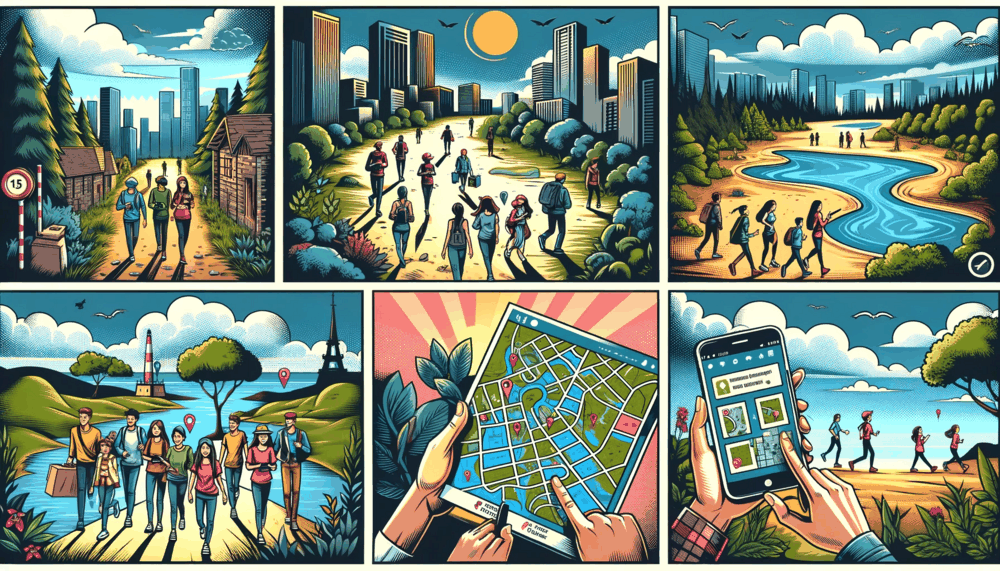
A treasure hunt isn’t one fixed format: it’s an umbrella term for games built around searching for a hidden treasure. That can mean a paper trail to one final prize, checkpoints whose clues combine into a lead clue, or a free-roam hunt through the streets for points. It works indoors, outdoors, or online, solo or in teams.
- Clues. Each stop or task points players toward a treasure: the next fixed spot in a chain, a piece of a bigger clue, or one of several treasures scattered across an open map.
- Checkpoints. Some hunts gate progress step by step, unlocking one clue at a time. Others ask teams to collect several clue pieces before they add up to one lead, or leave the order open entirely.
- Goal. The hunt ends when a team reaches the final treasure, cracks the last code, or racks up the most points before time runs out.
- Treasure Hunt vs. Scavenger Hunt vs. Geocaching
- How a Treasure Hunt Works
- Basic Treasure Hunt Rules
- Treasure Hunt Formats
- What Does “Treasure Hunt” Mean in Team Building?
- Corporate Treasure Hunt Events
- Digital and GPS-Based Treasure Hunts
Treasure Hunt vs. Scavenger Hunt vs. Geocaching
People often use these three terms as if they mean the same thing, but each one asks players to do something slightly different, even though all three send you looking for something hidden.
| Format | Main Objective | Typical Tasks | Best Use |
|---|---|---|---|
| Treasure Hunt | Follow a chain of clues to one final prize or location | Riddles, ciphers, maps, and challenges solved in sequence | Team building, birthday parties, city tours |
| Scavenger Hunt | Collect or photograph as many items on a list as possible | Checklist hunting, no fixed order, often a race against the clock | Large open groups, quick icebreakers, school events |
| Geocaching | Use GPS coordinates to find a hidden container and log the visit | Navigate to exact coordinates, sign a logbook, sometimes swap a small item | Solo or family outdoor hobby, ongoing worldwide game |
A treasure hunt can borrow geocaching’s GPS coordinates or a scavenger hunt’s checklist, but what sets it apart is the puzzle-solving: every stop is a clue to crack, not just an item to check off, on the way to the treasure.
How a Treasure Hunt Works
“Treasure hunt” isn’t one mechanic; it’s three common ones, and they differ in how a team gets from the first clue to the treasure.
- Point-to-point on paper. The classic version: a printed map or card sends players from one marked spot to the next, in a fixed order, until the last stop reveals the treasure.
- Checkpoints that build one lead clue. Teams visit a set of stations, each one handing over a piece: a number, a letter, a fragment of a riddle. Only once every piece is in hand does the group have what it needs to solve the master clue and find the treasure.
- Free-roam hunting for points. Teams pick their own order, tracking down treasures scattered across a map and answering questions or clearing tasks at each one. There’s no required sequence: the score comes from how many treasures a team finds and how well it answers, not from finishing a chain.
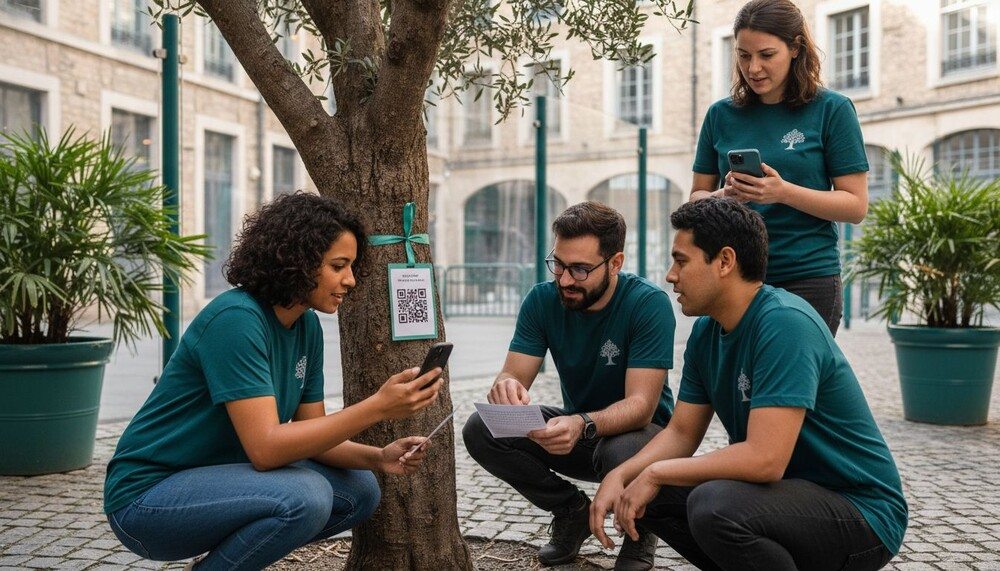
Treasure hunts built on the TerraHunt game platform run the third version. Each team gets an activation code and QR code by email, scans it to unlock the game on a tablet or phone, and sets off across the map at its own pace. Reaching a treasure, or solving what’s waiting there, hands over a task, a question, or a piece of information, and teams can take the map’s treasures in whatever order fits their route.
Difficulty usually climbs as the hunt goes on, in any of these versions. Early clues orient the group and build confidence. Later ones demand sharper lateral thinking, closer teamwork, or a second look at the surroundings. Good hunts don’t test brute effort. They test how well a group reads a clue, argues about what it means, and commits to an answer under a bit of time pressure. Games built on the TerraHunt platform are played in teams of 2 to 5 for that same reason: enough people to split the reading and the arguing, not so many that half the group just watches.
Basic Treasure Hunt Rules
Exact rules vary by organizer, but most treasure hunts share a common structure.
- Time limit. Most hunts run inside a set window, and teams that haven’t finished when time runs out simply stop where they are.
- Hints. Organizers usually offer a limited number of hints per team, often at a penalty to the score or the clock.
- Allowed tools. Phones, maps, and reference materials are typically fair game unless the rules say otherwise; searching online for the exact answer is usually off-limits.
- Scoring. Points can come from speed, accuracy, bonus challenges, or a mix of all three, depending on the format.
- Safety and public space. Outdoor hunts ask players to stay on public paths, respect private property, and follow local traffic rules.
- Dispute resolution. A moderator or organizer has the final call on any disagreement about an answer or a rule.
Treasure Hunt Formats
“Treasure hunt” covers a wide family of games. Four dimensions usually decide which version you’re playing.
- Indoor or outdoor. Indoor hunts run inside a building, office, or venue, weatherproof and easy to schedule any time of year. Outdoor hunts send players through real streets, parks, or campuses, using the city itself as the game board.
- Linear or open route. Some hunts follow one pre-designed path from start to finish. Others let teams navigate freely and choose their own order of stops.
- Paper or GPS-digital. Classic hunts run on printed clue cards. Digital hunts use a phone app with GPS tracking, live scoring, and instant clue delivery, and some run entirely on a shared screen for teams that can’t gather in one place.
- Recreational or corporate. Family and party hunts stay casual and short. Corporate versions add structured team challenges, a moderator, and clear time limits.
These dimensions mix and match freely. A corporate outdoor hunt can run on GPS with an open route, while a kids’ birthday hunt might use paper clues on a fixed path around the backyard.
Three Named Formats: Treasure Hunt, Challenge Tour, and Mystery Trail
The TerraHunt game platform offers three named formats that sit inside the taxonomy above. All three use the same GPS game engine, and all three ask teams to search for treasures, answer questions, and complete tasks. What changes between them is the route.
- Treasure Hunt is the open-route format. Teams navigate the map freely on a tablet or phone, picking their own order for the treasures on the map. There’s no single correct path, so two teams can finish the same game having gone about it in a completely different order.
- Challenge Tour switches to a fixed route: every team follows the same pre-designed path from start to finish, hitting the same treasures, questions, and tasks in the same order. It suits events where organizers want every team moving through the same stops at roughly the same pace.
- Mystery Trail runs on that same fixed-route mechanic. TerraHunt has built it around themed walking routes rather than a generic city loop; the Hustopeče edition, for example, follows a lookout tower, an educational nature trail, and a historic hill.
How to Set Up a DIY Treasure Hunt
- Plan the route. Walk or map out the path before hunt day, and decide upfront whether it will run as a fixed chain or an open route.
- Write the clues. Build each clue around something at the actual location, a landmark, an object, a detail only visible on-site, so it can’t be solved from a screen alone.
- Hide the treasure. Pick a final spot that matches the group’s skill level, and make sure it’s genuinely reachable once the last clue is solved.

What Does “Treasure Hunt” Mean in Team Building?
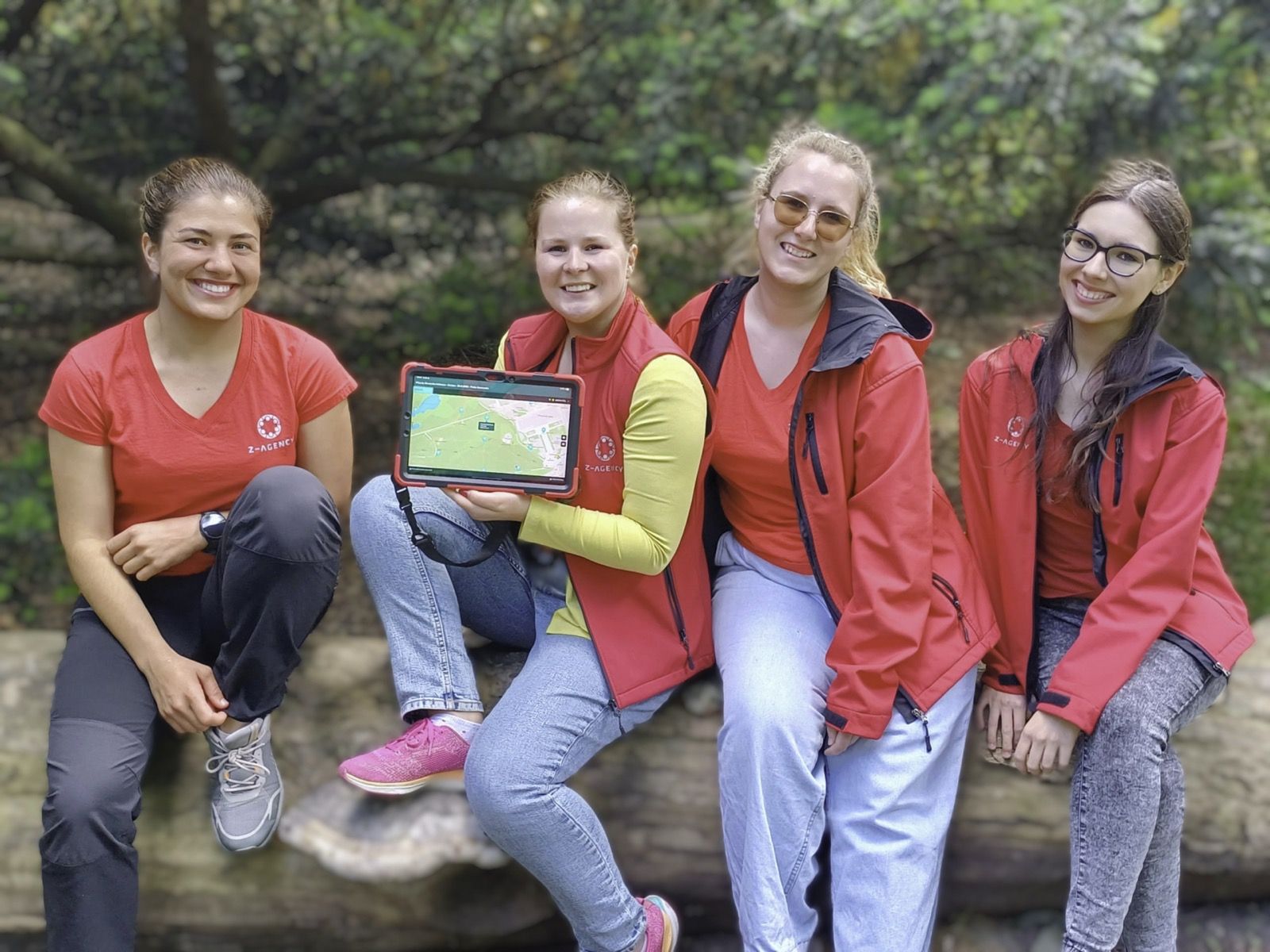
In a workplace context, a treasure hunt means something more specific than the party game. It’s a structured activity where a team works through clues, puzzles, or challenges together instead of individually.
The point isn’t the treasure itself. It’s what solving for it forces the group to do: share information out loud, split tasks, disagree about an answer, and commit to one before time runs out. That mix of communication and shared problem solving is why treasure hunts show up so often on team-building agendas instead of, say, a lecture or a trust fall.
Ask five people what a “treasure hunt” means at work and you’ll get five slightly different answers: a citywide game, an office scavenger challenge, an escape-room-style puzzle box. All of them share the same backbone: clues, checkpoints, a goal, done as a group.
Corporate Treasure Hunt Events
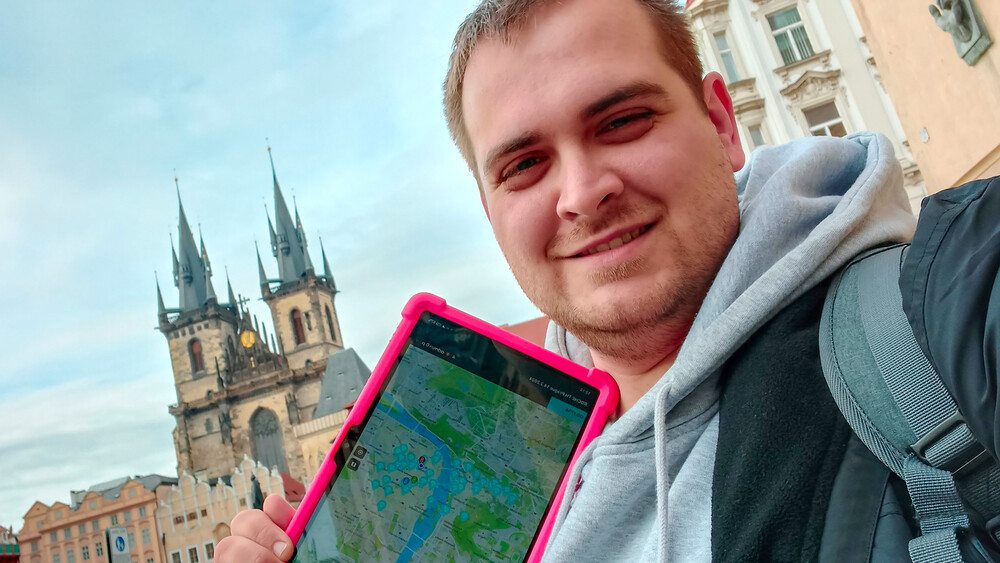
Corporate treasure hunts scale the same clue-checkpoint-goal structure to fit an entire company outing, not just one small team, usually with a moderator running the schedule and a shared leaderboard tracking every team’s progress at once. Which format fits best depends on the group: an open-route Treasure Hunt lets teams move at their own pace, while a fixed-route Challenge Tour or Mystery Trail keeps every team on the same stops at roughly the same time, which matters more when a large outing has to stay on a tight schedule. One working example: the GPS-guided city games built on the TerraHunt platform, such as the Prague game, send teams through local landmarks with a puzzle at each stop.

Digital and GPS-Based Treasure Hunts
Paper clues still work, but GPS and mobile apps have changed what a treasure hunt can do. Three formats cover most digital hunts today.
- Location-based mobile/GPS hunts. Players physically navigate to real coordinates. The app tracks a team’s position in real time, unlocks clues automatically once a group reaches the right spot, and posts scores to a shared leaderboard the moment a task is solved.
- App-assisted hunts. Players use an app to receive clues and submit answers, but the app doesn’t continuously track location, teams move and check in on their own schedule instead of being tracked in real time.
- Fully virtual/remote hunts. No physical navigation at all. Teams work from a shared map or screen, solving the same clue-and-checkpoint structure from wherever they are.
That shift isn’t only about convenience. A 2010 study in the Journal of Universal Computer Science tested a web-based treasure-hunt model as a support tool for inquiry-based learning and reported positive results in that educational setting. That kind of built-in feedback loop—solving a clue, getting a result, moving forward—keeps players motivated in a way passive study material doesn’t.
Frequently Asked Questions
How long does a treasure hunt take?
Hunts built on the TerraHunt platform typically run somewhere between one and three and a half hours, depending on the location and route. A tight lunchtime version can wrap in under an hour; a full citywide corporate hunt with multiple checkpoints often stretches closer to three hours once travel between clues is factored in.
What’s a good team size?
TerraHunt recommends small teams of 2 to 5 players. That’s enough people to split tasks and cross-check an answer, but not so many that half the group stands around while one person solves the clue. Larger events simply run more teams in parallel rather than making any single team bigger.
What makes a good clue?
A good clue is solvable but not obvious. It gives players enough to work with, a location detail, a wordplay hint, a piece of local knowledge, without handing them the answer outright. The best clues also fit their setting: a riddle about a clock tower works better standing in front of one than read off a printed sheet indoors.
GPS-guided treasure hunts built on the TerraHunt game platform work for teams of any size, in cities across Central Europe and online for remote groups. See the full list of outdoor games to find a route near you.
Jiri Zmidloch is the founder of TerraHunt. He designs the city cipher games and walks every route himself before it goes live.
Treasure Hunt Prague
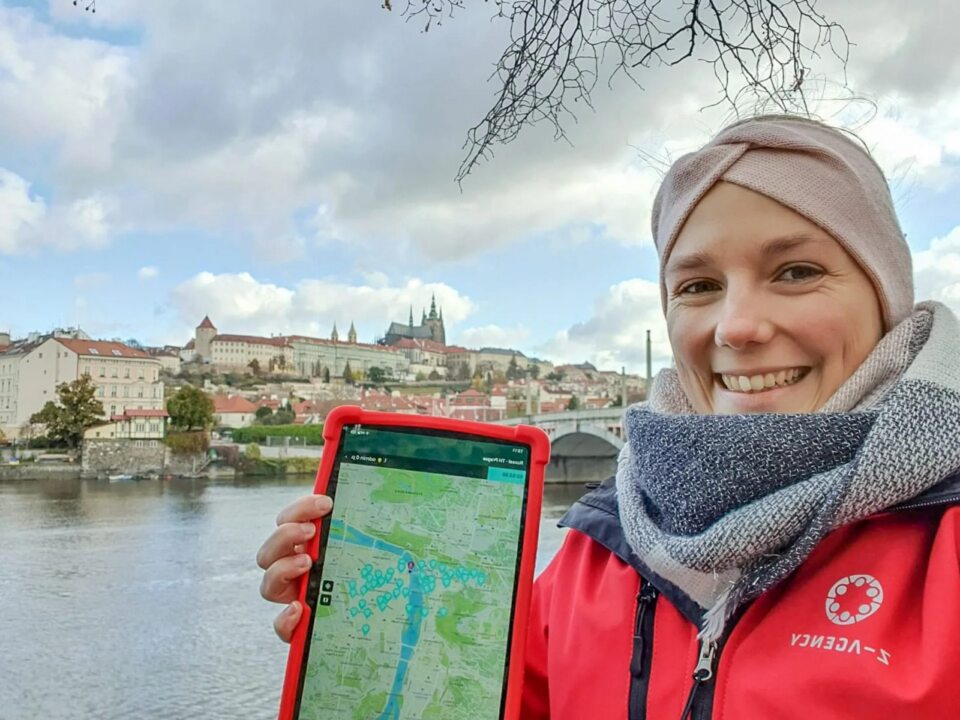
Our instructors run the game with tablets, or you start it yourselves on your phones. Tell us the number of people and the date, we will get back to you the same day.
Go Deeper
Game rules, the difference between outdoor and virtual play, and practical planning questions are covered in our Treasure Hunt FAQ.
Ready to pick a city for your team? Browse the full outdoor games lineup.