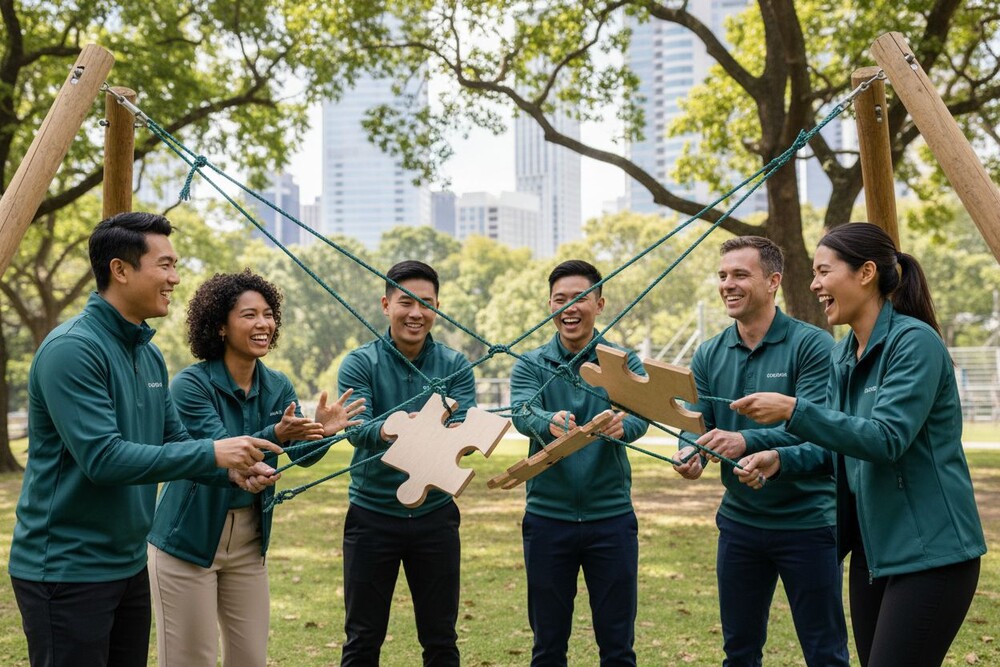
Did you know that corporate teams who participate in outdoor activities report a 20 percent increase in group productivity? Workplaces everywhere are searching for genuine ways to build trust and improve collaboration. Outdoor team experiences break the routine and offer fresh opportunities for connection and real growth.
By stepping out together, teams discover new strengths, sharpen communication, and become more adaptable to any challenge the workplace brings.
Treasure Hunt in the streets of Prague: 73 treasures, the team mixes itself.View the game
Defining Outdoor Team Activities and Their Purpose
Outdoor team activities are structured collaborative experiences designed to enhance group dynamics, communication, and collective performance outside traditional workplace environments. Read more about our team activity workflow to understand how these experiences transform team interactions.
According to research on team building, these activities fundamentally aim to clarify team roles, improve interpersonal relationships, and align collective goals. By moving teams from conference rooms into natural settings, organizations create opportunities for more authentic interactions that transcend standard professional boundaries. The core purpose isn’t just about fun, it’s about strategic relationship building and performance enhancement.
Typical outdoor team activities often involve:
Problem-solving challenges
Collaborative physical tasks
Strategic navigation exercises
Communication-based missions
Trust-building scenarios
These experiences work by placing team members in environments that require genuine cooperation, mutual support, and creative thinking.
When individuals step outside their comfort zones and typical workplace hierarchies, they discover new strengths, develop deeper mutual understanding, and learn to leverage each other’s unique capabilities more effectively.
Popular Types of Outdoor Team Activities
Outdoor team activities span a diverse range of experiences designed to challenge, engage, and unite teams in unique environments. Explore our comprehensive guide to team building activities to discover the full spectrum of transformative group experiences available.
According to research from industry experts, adventure-based challenges form a significant category of outdoor team activities. These include dynamic experiences like obstacle courses, zip-lining, and rock climbing that push participants beyond their comfort zones. Each activity strategically tests physical limits while simultaneously developing communication, trust, and collaborative problem-solving skills.
Typical outdoor team activities can be categorized into several engaging formats:
Adventure Challenges: Physical obstacle courses and high-intensity activities
Sports-Based Tournaments: Competitive team sports that require coordination and strategy
Nature-Based Retreats: Camping experiences focused on collective survival and teamwork
Trust-Building Exercises: Blindfolded challenges, trust falls, and collaborative rescue scenarios
Corporate Social Responsibility (CSR) Activities: Environmental clean-ups, community service projects
These diverse activities share a common goal: transforming individual team members into cohesive, high-performing units.
By removing traditional workplace constraints and placing participants in dynamic, unpredictable environments, organizations can unlock new dimensions of team potential, fostering deeper connections and more effective collaborative strategies.
Here’s a summary of common outdoor team activity types and their primary benefits:
According to research from McKinsey, spending time in nature dramatically improves cognitive functioning and team performance. These wilderness-based experiences enhance participants’ attention spans, creativity, and overall well-being, resulting in sustained organizational productivity. Mental clarity and team cohesion emerge as direct outcomes of strategically designed outdoor activities.
Key benefits for corporate teams include:
Enhanced communication skills
Improved problem-solving capabilities
Accelerated trust-building among team members
Significant stress reduction
Promotion of physical and mental wellness
Natural leadership skill development
Increased team adaptability and resilience
Corporate Wellness Magazine highlights that outdoor adventure activities fundamentally transform team dynamics. By removing traditional workplace constraints, organizations create environments where employees can genuinely connect, challenge themselves, and develop deeper professional relationships. These experiences aren’t just team-building exercises—they’re strategic investments in human capital that yield measurable improvements in organizational performance and employee engagement.
According to McKinsey research, implementing outdoor activities demands careful consideration of participant diversity and engagement strategies. Organizations must design inclusive options that accommodate varying physical abilities, ensuring every team member can participate and benefit from the experience. This approach prevents marginalization and promotes genuine team connection.
Participant Assessment: Evaluate team members’ physical capabilities and comfort levels
Activity Selection: Choose scalable challenges with multiple participation modes
Technology Management: Plan deliberate technology disconnection periods
Safety Protocols: Develop comprehensive risk management and emergency response plans
Logistical Planning: Consider transportation, equipment, and environmental conditions
Inclusive Design: Create alternative participation paths for different physical abilities
Post-Activity Reflection: Schedule structured debriefing and learning sessions
Successful implementation transforms outdoor team activities from simple events into strategic organizational development opportunities. By prioritizing inclusive design, safety, and meaningful engagement, businesses can create powerful experiences that genuinely enhance team dynamics, individual growth, and collective performance.
Prygl Hunt: the same game, nature around the Brno Reservoir instead of pavement.View the game
Comparing Outdoor, Virtual, and Hybrid Activities
Learn more about the nuances of team building approaches to understand the strategic advantages of different engagement models. Modern organizations now have unprecedented flexibility in designing team experiences that transcend traditional workplace boundaries.
According to recent research on virtual team dynamics, hybrid engagement models offer unique opportunities for team development. Virtual reality environments can surprisingly enhance newcomers’ inclusion and perceived closeness, challenging traditional assumptions about remote interaction effectiveness. However, these models require intentional design to prevent potential communication breakdowns and maintain team cohesion.
Comparative characteristics of team building approaches:
Outdoor Activities
Maximum physical interaction
Direct sensory experiences
High spontaneity and unpredictability
Virtual Activities
Global accessibility
Low logistical complexity
Technology-mediated interactions
Hybrid Activities
Flexible participation
Balanced engagement options
Customizable interaction levels
Research from distributed team studies highlights that successful hybrid models demand strategic planning. Organizations must develop intentional engagement strategies that address potential misunderstandings and proactively support team members’ psychological safety, regardless of their physical location or participation mode. The goal is creating seamless, inclusive experiences that transcend traditional workplace constraints.
Take Your Team Further With TerraHunt’s Outdoor Challenges
Is your organization searching for a genuine boost in team engagement, communication, and resilience? If you face the same workplace barriers discussed in our guide—unclear roles, weak relationships, or limited opportunities for authentic collaboration—now is the moment to break free from the traditional office setting. The latest research proves that structured outdoor activities ignite authentic teamwork, yet bringing these ideas to life can feel overwhelming without the right tools. At TerraHunt.com, we transform theory into action with versatile solutions that fit your unique teams and objectives.
Experience the difference with our customizable outdoor team activities. Discover options that support diverse groups, encourage creativity, and foster real trust. Start planning for greater engagement and measurable results, and see why leading companies use TerraHunt’s solutions to unlock lasting team potential.
Your stronger team is one step away. Contact us today and bring these proven benefits to your organization.
Frequently Asked Questions
What are outdoor team activities?
Outdoor team activities are structured experiences designed for team collaboration, communication, and performance enhancement in natural settings, moving away from traditional workplace environments.
What are the main benefits of offering outdoor team activities?
The primary benefits include improved communication skills, enhanced problem-solving capabilities, accelerated trust-building, stress reduction, and promotion of team adaptability and wellness.
How can organizations ensure inclusivity in outdoor team activities?
Organizations can ensure inclusivity by assessing participants’ physical abilities, selecting scalable challenges, creating alternative participation paths, and promoting a safe environment for everyone.
What types of outdoor team activities are most effective for team building?
Effective outdoor team activities include adventure challenges like obstacle courses, problem-solving games such as treasure hunts, trust-building exercises, sports-based tournaments, and nature-based retreats, each designed to foster collaboration and connection.