Home · Blog · Český Krumlov: What to See, Attractions and History
Český Krumlov: What to See, Attractions and History
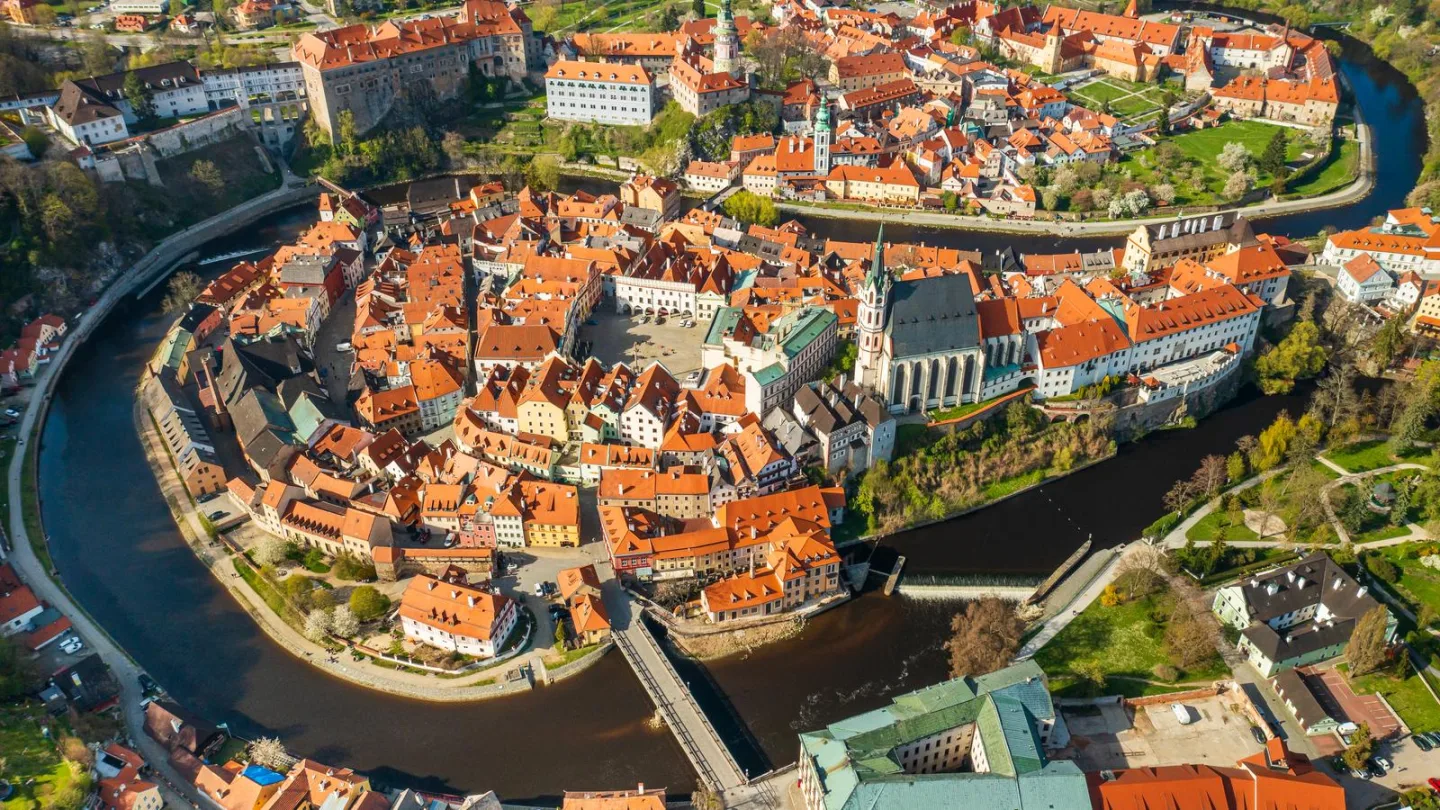
What to see in Český Krumlov in one day: the castle, Plášťový most, St. Vitus Church, Latrán and the monasteries. Plus key numbers, history and a Treasure Hunt tip for teams.
What should you see in Český Krumlov if you only have a day? Start at the castle above the Vltava, walk through the courtyards across Plášťový most (the Cloak Bridge) to the castle garden, and in the afternoon head down to St. Vitus Church, Latrán and the monasteries. The town’s historic center is on the UNESCO World Heritage List. The old town sits in a bend of the Vltava and you can cover all of it on foot, and if you want to see the roofs and the tower from the water, hop on a raft. Below you’ll find the key numbers, highlights, sightseeing tips, history and how to explore the town as a team.
Český Krumlov by the Numbers
A quick overview for planning your trip. Every number belongs to a specific place you’ll pass on your walk.
The castle takes the most time; the rest of the town is compact and easy to cover in an afternoon.
- The lords of Krumlov founded the Gothic castle in 1250.
- The Rosenbergs took over the estate in 1302, and the castle flourished under them for three centuries.
- The castle complex includes 46 buildings and palace structures.
- The castle has five courtyards and a 12-hectare garden.
- 162 steps lead up to the Castle Tower.
- The historic center has been on the UNESCO list since December 4, 1992.
- Records of the Český Krumlov parish go back to 1329.
- A sightseeing raft trip lasts 50 minutes.
- Treasure Hunt Český Krumlov keeps a team busy for 2 to 3 hours.
Highlights of Český Krumlov
The town’s main landmark is the castle and chateau with its castle garden. The complex stands on a rocky hill high above the Vltava riverbed, settled as early as the Bronze Age.
The interiors are split into two tour routes. The Renaissance and Baroque apartments include the castle’s St. George Chapel, while the Schwarzenberg route ends in the passages of Plášťový most.
The castle’s Baroque theater is the oldest preserved Baroque theater in the world. If you love theater, don’t rush this one.
The castle also has a bear enclosure. On your way to the courtyard, stop and look down into the moat.
You can walk straight through the entire castle complex; across the courtyards and Plášťový most you’ll reach the castle garden. From the bridge you’ll see the old town roofs and the river bend below you, which is why almost everyone takes photos here.
After all that Baroque, the Egon Schiele Art Centrum downtown strikes a completely different tone. It makes a good stop when it starts to rain.
What to See in Town
Náměstí Svornosti (Concord Square) is the natural starting point. From here every landmark downtown is a few minutes’ walk, and the route to the castle crosses the river.
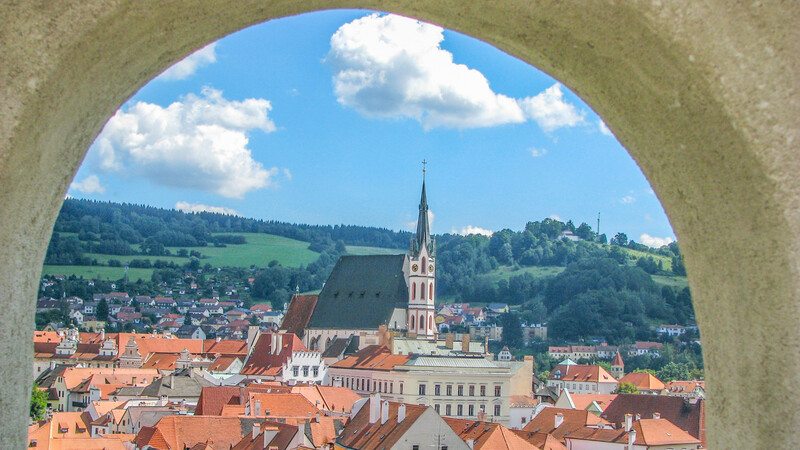
St. Vitus Church stands on a promontory above the Vltava, with the river separating it from the castle. The church got its current look from a Neo-Gothic renovation at the end of the 19th century. The church also holds the tombs of the town’s former lords.
Take Latrán slowly. The street below the castle has small shops, passages into courtyards and views up to the tower.
The Minorite and Poor Clares monasteries form the town’s second-largest historic complex. A Baroque rebuild in the 17th and 18th centuries gave the complex its current form. The complex houses exhibits and temporary exhibitions, so it’s worth a visit with kids too.
Museum Fotoatelier Seidel is an original photo studio from 1905. The old cameras and glass plates make it feel as if the photographer just stepped out for lunch.
From the river you’ll see the town differently: the sightseeing raft trip runs through downtown with views of all the major landmarks. With kids, Grafitový důl (the Graphite Mine) is worth it too; you ride through it on a mine train.
The castle complex is open to the public from April to October. Off-season, plan on walking the town and visiting museums instead.
History of the Town
After the lords of Krumlov died out, the Rosenbergs took over their estate. Under them the castle became a lavish Renaissance residence and the town saw its greatest boom.
After the Rosenbergs, the castle passed to the Eggenbergs and then to the Schwarzenbergs. Each family added its own buildings and decoration, which you can tell apart by style on the tour.
In the 19th century the residence lost its importance. In 1950 the castle became property of the Czechoslovak state.
Over the centuries, one family followed another here, and their crests and buildings shape the look of the old town today. Know their order, and you’ll read the castle like a chronicle.
Krumlov for a Company Trip
Treasure Hunt Český Krumlov covers both banks of the Vltava, from the Minorite monastery past St. Vitus Church and Plášťový most to the castle garden and the town park.
Teams play on tablets or phones with our GPS app and see all the treasures on the on-screen map. In Treasure Hunt the teams choose the order of the treasures themselves, so strategy starts right on Náměstí Svornosti, which makes a good starting point.
Treasures unlock when a team gets within roughly 10 to 40 meters, depending on the terrain and the type of game. The winner isn’t the smartest or the fastest team, but the more patient and observant one.
Every order includes our rain guarantee, so the program goes ahead on the original date regardless of the weather: if it rains, we swap the city game for a story game in indoor mode, questions pop up on screen one by one, and the team sits together in a hall or restaurant.
Planning more stops around Bohemia? Treasure Hunt Pilsen and Treasure Hunt Prague work the same way.
Frequently Asked Questions
What can you see in Český Krumlov in a day? The castle, courtyards, Plášťový most and the castle garden in the morning; St. Vitus Church, Latrán and the monasteries in the afternoon. In the evening, a raft trip is worth it.
Why is Český Krumlov on the UNESCO list? The whole historic center is listed, not just the castle. The narrow Gothic and Renaissance lanes around the castle have survived as one continuous whole.
When is the castle open? Interior tours run in season from April to October, while the garden and courtyards invite a stroll at any time of day.
Is Český Krumlov a good fit for a company trip? Yes, Treasure Hunt Český Krumlov takes a morning or an afternoon and leads the team past the main landmarks on both sides of the river.
What if it rains? Head to the museums and monasteries. The corporate program still goes ahead; instead of the outdoor game, we run a story game in indoor mode.
Book Treasure Hunt Český Krumlov and let your team discover the town, from the Minorite monastery to the castle garden, tablet in hand. Start on Náměstí Svornosti, a short walk from both the castle and the river. The game fits into a morning, leaving the afternoon free for a castle tour or a raft trip. Send us your date and group size, and we’ll suggest a starting point and a time that fits your program.
Treasure Hunt Cesky Krumlov
Our instructors run the game with tablets, or you start it yourselves on your phones. Tell us the number of people and the date, we will get back to you the same day.
Summary
- In one day in Český Krumlov you can see the castle, courtyards, Plášťový most and castle garden in the morning, then St. Vitus Church, Latrán and the monasteries in the afternoon.
- The historic center of Český Krumlov has been on the UNESCO World Heritage List since December 4, 1992, and the whole center is listed, not just the castle.
- The castle complex includes 46 buildings, five courtyards and a 12-hectare garden, and 162 steps lead up to the Castle Tower.
- The castle interiors are open from April to October, while the garden and courtyards invite a stroll at any time of day.
- Treasure Hunt Český Krumlov keeps a team busy for 2 to 3 hours, and if it rains, it runs on the original date as a story game in indoor mode.
Book Treasure Hunt Cesky Krumlov for your date, or write to us or call with your date and group size.