Home · Blog · Pálava: Famous Landmarks, Scenic Nature and the Nové Mlýny Reservoirs
Pálava: Famous Landmarks, Scenic Nature and the Nové Mlýny Reservoirs
Pálava combines Gothic castle ruins, limestone cliffs with rare plants and the wine town of Mikulov. Here's the route, the key facts and a team game tip.
Head out to explore a place where mammoth hunters once lived and where you can still spot many rare plant and animal species.
On top of that, you get well-marked hiking and cycling trails, a rich history and good wine.
What Is the Pálava Protected Landscape Area
Pálava sits where the Carpathian and Pannonian regions meet, and it’s protected as a Protected Landscape Area (CHKO). Besides the limestone hills, the area also includes landscapes you wouldn’t expect here at first glance.
- Declared a Protected Landscape Area: 1976
- Climate: one of the warmest and driest regions in the Czech Republic
- Parts of the area: the Pavlov Hills, the Milovice Uplands, the floodplain landscape along the Dyje River and the salt marsh near Nesyt
- Starting points for a trip: Mikulov and Pavlov
From Mikulov Across All of Pálava
You can set out from Mikulov and cross all of Pálava on foot or by bike. A 15 km trail runs here, clearly marked with hiking signs. Don’t expect to see everything in a single day, though.
The town of Mikulov alone, on the historic border between Moravia and Austria, will keep you busy for a few hours, because it would be a real shame to miss its well-preserved historic downtown (declared a heritage zone in 1982), Svatý kopeček (Holy Hill) with the Chapel of St. Sebastian from 1623, or the local Renaissance chateau.
Kozí hrádek
Before you even leave Mikulov, there’s another sight waiting: Kozí hrádek (Goat Castle). It’s one of the town’s landmarks, and its job was to protect the route linking Brno and Vienna. The castle was built in the 15th century. Its main part was a two-story artillery tower with a walkway and loopholes. Today it’s a place to rest, with a lookout tower where you can take in the view of Mikulov’s historic core.
Dívčí hrady, Also Known as Děvičky
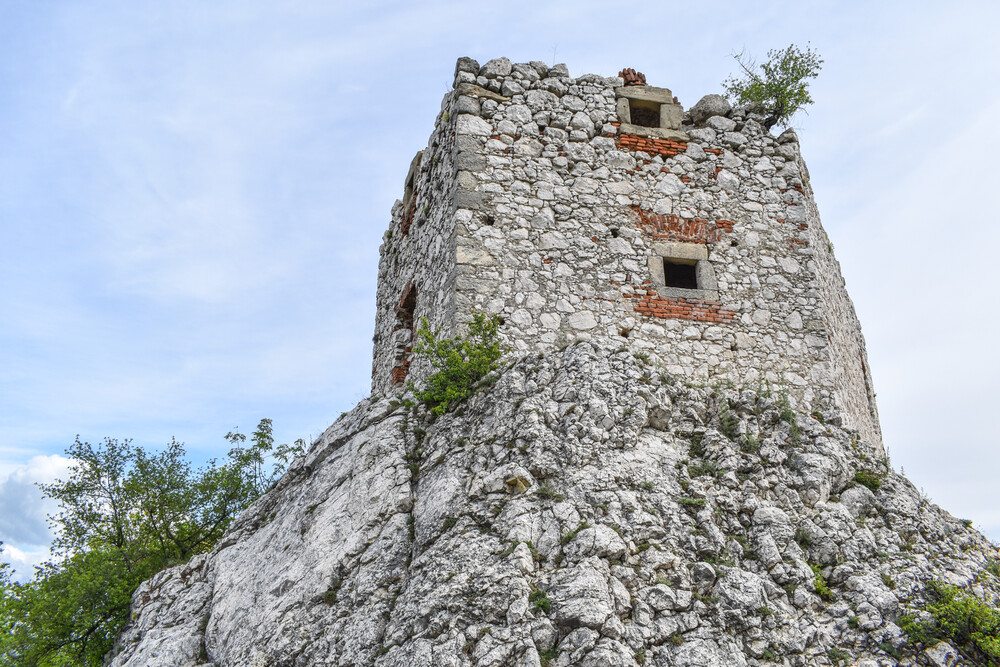
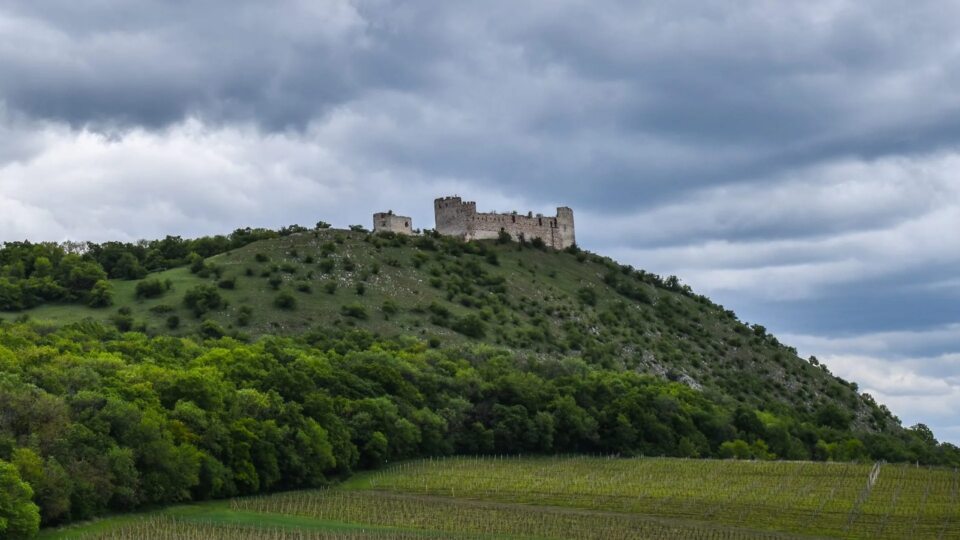
Near the villages of Pavlov and Dolní Věstonice stand the ruins of the Gothic castle Dívčí hrady (Maidens’ Castles), also called Děvičky. The place got its name from three rock formations standing right in front of the ruins. According to legend, they’re three girls turned to stone.
The ruins clearly dominate the landscape. They sit right on top of a tall limestone cliff. The Děvín ridge rises to 549 meters above sea level and includes the highest peak of the Pavlov Hills.
Records of the original castle go back as far as 1222, when it was still called Dewiczky. In 1344 the castle passed to the Liechtenstein family, who owned it until 1575. This noble family held great influence and property in South Moravia.
Where Mammoth Hunters Lived
Prehistoric people settled below the Pavlov Hills. The proof: remains of fireplaces, piles of mammoth bones and tusks and, above all, the world-famous Venus of Dolní Věstonice.
According to legend, Roman soldiers later started growing grapes here, so the local wine has a long story behind it.
Sirotčí hrádek
Some people call Sirotčí hrádek (Orphan’s Castle) the Pink Castle. It towers above the village of Klentnice, on the summit of Stolová hora. It’s part of the Růžová hora nature reserve.
The Gothic castle was built in the 13th century and changed owners many times over the years. Gradually the owners stopped caring for it, and the castle fell into ruin. It was originally built on two rocks separated by a ravine and connected by a bridge.
One rock held the palace and the other a watchtower. Today you can only visit the ruins of the palace.
An intriguing legend is tied to Sirotčí hrádek: it tells of a knight named Čičos, said to belong to the Knights Templar. He received the castle from them to manage and took great care of it. Then he was called up to war.
Because he refused to go, a Templar party set out to punish him. Before that, though, Čičos’s wife begged the commander to baptize their son. He agreed, named the boy Orphan (Sirotek), and then had the knight executed for his arrogance.
His wife died of a broken heart, and everyone in the castle was killed. Only little Orphan was left, and the knights took him away. As an adult he returned to the castle, learned what had happened to his parents and went mad.
Ever since, people say he rides through the countryside every night as a mad horseman.
The Děvín Nature Trail Runs Through Stunning Scenery
Near Klentnice begins the Děvín nature trail, which leads through the most valuable parts of the Pálava Protected Landscape Area. Around 600 species of higher plants grow here, almost a quarter of all such species in the Czech Republic.
The full loop is 11 kilometers long with 15 stops. It also covers the slopes of Děvín with the Děvičky castle ruins mentioned above.
What Grows on Pálava
Irises grow on Děvín, Svatý kopeček and Kočičí skála (Cat Rock). Rarer finds include large-flowered sandwort and steppe oat-grass, which has grown here since the end of the last ice age. Local rarities also include Mediterranean sage and dry rocky grasslands.
Discover the Nové Mlýny Reservoirs
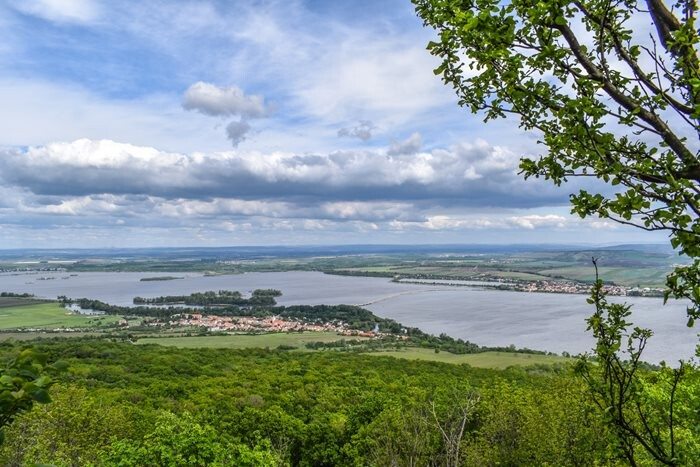
Many cycling routes run around Pálava. A very popular one leads around the Nové Mlýny waterworks, still debated today. The cascade of three reservoirs was built on the Dyje River in the 1970s and 1980s. Each reservoir serves a different purpose. The upper one is for recreation, the middle one is home to waterbirds including cormorants and was declared the Věstonická nádrž nature reserve, and the lower one supplies water for irrigation. The site’s landmark is a small island where the former Church of St. Leonard still stands. The church is no longer in good shape; you’ll see damaged masonry and walls. It’s the last remaining building of the vanished village of Mušov, one of the oldest villages in the area. The village was founded in the first half of the 13th century.
How Big Are the Reservoirs
The Nové Mlýny reservoirs spread over more than thirty square kilometers. Yet they’re very shallow. Before they were built, this was a landscape of floodplain forests along the Dyje below Pálava.
Mikulov as a Team Game
You can also explore Mikulov itself as Treasure Hunt Mikulov. Teams play on tablets or phones with our GPS app, see the treasures on the on-screen map and choose their own order for visiting them.
The number of treasures isn’t the main thing; each game keeps a team busy for 2 to 3 hours. That leaves the rest of the day for a hike up Děvín or a bike ride around Nové Mlýny. For a corporate event day, it makes sense to start with the game in Mikulov, where the hiking trail across all of Pálava also begins, and continue outdoors in the afternoon.
Send us your date, group size and your idea for the rest of the day, for example whether you’d like to head up Děvín after the game or ride bikes around Nové Mlýny. We’ll prepare the game for you.
Frequently Asked Questions
Where should I start a trip to Pálava? The best starting points are Mikulov and Pavlov. A 15 km trail, clearly marked with hiking signs, runs from Mikulov across all of Pálava.
How high is Děvín on Pálava? The Děvín ridge rises to 549 meters above sea level and includes the highest peak of the Pavlov Hills. The Děvičky castle ruins stand on its limestone cliff.
How long is the Děvín nature trail? The Děvín nature trail loop is 11 kilometers long with 15 stops. It starts near Klentnice and leads through the most valuable parts of the Pálava Protected Landscape Area.
Since when has Pálava been a Protected Landscape Area? Pálava was declared a Protected Landscape Area in 1976. It includes the Pavlov Hills, the Milovice Uplands, the floodplain landscape along the Dyje and the salt marsh near Nesyt.
What are the Nové Mlýny reservoirs? The Nové Mlýny reservoirs form a cascade of three reservoirs on the Dyje River below Pálava. The upper one is for recreation, the middle one holds the Věstonická nádrž nature reserve and the lower one supplies water for irrigation.
Treasure Hunt Pálava
Our instructors run the game with tablets, or you start it yourselves on your phones. Tell us the number of people and the date, we will get back to you the same day.
Summary
- Pálava was declared a Protected Landscape Area in 1976 and lies in one of the warmest and driest regions of the Czech Republic.
- A 15 km marked trail for hikers and cyclists runs from Mikulov across all of Pálava.
- The Děvín ridge rises to 549 meters above sea level, and the Děvičky castle ruins stand on its cliff.
- The Děvín nature trail is 11 kilometers long, has 15 stops and crosses an area with roughly 600 species of higher plants.
- The Nové Mlýny reservoirs on the Dyje River cover more than thirty square kilometers, and the Church of St. Leonard stands on a small island.
Before your Pálava trip, explore Mikulov as Treasure Hunt Mikulov; just send us your date and group size.